Posted on

Adenine – Sometimes Called Vitamin B-4

Adenine, Sometimes Called Vitamin B-4

Most Food Research products contain what is called Vitamin B-4, AdenineAdenine is considered by some health care professionals to be essential for heart health.

Published scientific evidence looks to support this (e.g. Yu F, et al. Nicotinamide Adenine Dinucleotide Supplementation to Alleviate Heart Failure: A Mitochondrial Dysfunction Perspective. Nutrients. 2025 May 29;17(11):1855; Tannus C, et al. Nicotinamide Riboside Supplementation Restores Myocardial Nicotinamide Adenine Dinucleotide Levels, Improves Survival, and Promotes Protective Environment Post Myocardial Infarction. Cardiovasc Drugs Ther. 2024 Dec;38(6):1385-1396; Leu JG, et al. The Cell Protective Effect of Adenine on Hypoxia–Reoxygenation Injury through PPAR Delta Activation. Life 2021, 11(12), 1408).

Over the years, adenine has been referred to as vitamin B-4, though it is not officially considered to be an “essential” nutrient.

Additionally, it is known that adenine has a central role in cellular respiration. It is part of adenosine triphosphate which provides the energy that drives and supports most activities in living cells, such as protein synthesis, chemical synthesis, muscle contraction, and nerve impulse propagation. In respiration it also participates as part of the cofactors nicotinamide adenine dinucleotide, flavin adenine dinucleotide, and Coenzyme A (Amjad J, et al. Role of NAD+ in regulating cellular and metabolic signaling pathways. Mol Metab. 2021 Feb 17;49: 101195).

Do Food Research Supplements Contain Adenine?

Some have wondered if Food Research supplements contain adenine. The fact is that pretty much all of them do!

Two ingredients that are in many Food Research supplements are Saccharomyces cerevisiae and organic brown rice, both of which contain adenine.

Published research clearly supports this view. Let’s look at Saccharomyces cerevisiae:

Saccharomyces cerevisiae. The adenine content of individual yeast extract powders was examined in relation to the cell mass (dry cell weight, DCW) achieved in culture media formulated with these powders. A general increase in DCW was observed with increasing adenine concentration in the yeast extract. … A minimum requirement for cell growth is at least as low as 12.5 mg of adenine/g of cells. (VanDousin W, et al. Adenine quantitation in yeast extracts and fermentation media and its relationship to protein expression and cell growth in adenine auxotrophs of Saccharomyces cerevisiae. Biotechnol Prog. 1997 Jan-Feb;13(1):1-7)

Here is some of why Saccharomyces cerevisiae contains adenine:

Saccharomyces cerevisiae (baker’s or brewer’s yeast) contains adenine for the same fundamental reason every living cell does: adenine is a core building block of many essential molecules. Here’s how it functions in yeast:

  1. Nucleic acid synthesis
  • Adenine is one of the four nucleotide bases in DNA (A–T pairing) and RNA (A–U pairing).
  • Without adenine, the yeast could not replicate its genome or transcribe genes.
  1. Energy and metabolism
  • Adenine is part of adenosine triphosphate (ATP), the cell’s main energy currency.
  • It is also found in ADP, AMP, and in cofactors like NAD⁺/NADH and FAD (via adenine-containing adenosine moieties).
  1. Signaling and regulation
  • Cyclic AMP (cAMP), a derivative of adenine, is a key second messenger in yeast nutrient sensing and stress responses.
  1. Biosynthetic context
  • Yeast cells synthesize adenine de novo through the purine biosynthetic pathway, starting from simple precursors (like amino acids and ribose-5-phosphate).
  • Many lab strains have mutations in this pathway (e.g., ADE2, ADE8), which is why researchers often supplement growth media with adenine to prevent red pigment accumulation or growth defects.

So Saccharomyces cerevisiae doesn’t contain adenine for any special “yeast-only” reason—it’s a universal requirement of cellular life, critical for genetic information, energy transfer, and metabolic regulation.

It should be added that Saccharomyces cerevisiae has a higher concentration of adenine than wheat germ or organic brown rice.

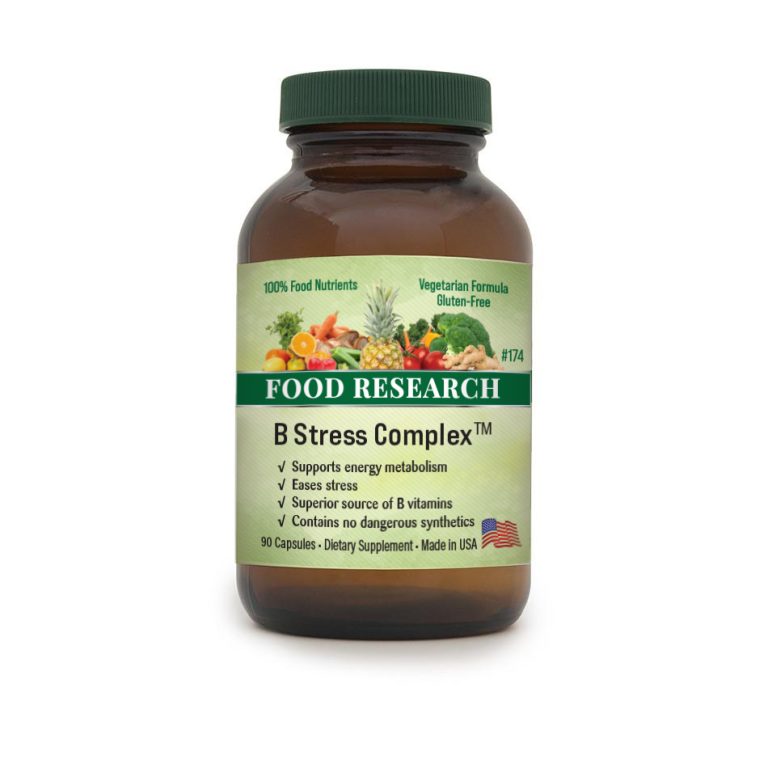
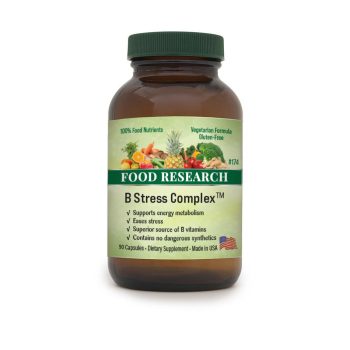
At Doctors’ Research we wondered how much adenine would be in 521 mg of Saccharomyces cerevisiae, which is the minimum amount contained in Food Research’s B Stress Complex.

There isn’t a single fixed number, because the adenine content varies. But we can make a reasonable ball-park estimate from typical yeast composition.

  1. Find nucleic-acid content

Published analyses of dried baker’s yeast report roughly:

  • RNA: 5–10 % of dry weight (yeast is RNA-rich).
  • DNA: ~0.5 % of dry weight.

Let’s take a midrange total nucleic acid content ≈ 7 % of dry mass.

For 521 mg dry weight:

  • Total nucleic acids ≈ 0.07 × 521 mg ≈ 36 mg.
  1. Fraction of adenine bases

In RNA (adenine, cytosine, guanine, uracil) → ~25 % adenine by base count.
In DNA (adenine, thymine, cytosine, guanine) → ~25 % adenine.

So adenine bases ≈ 0.25 × 36 mg ≈ 9 mg (as the free base equivalent).

  1. Add other adenine-containing molecules

Yeast also contains ATP, NAD⁺, FAD, etc., but those pools are small compared with the bulk RNA. That might add perhaps another milligram or two of adenine equivalents.

Estimated range

≈ 8–12 mg of adenine (as free base) in 521 mg dried yeast
—roughly 1.5–2 % of the dry weight.

This is only a biochemical back-of-the-envelope figure.
Different growth phases, extraction methods, or definitions (free vs. bound adenine) can shift the result, but it gives you the right order of magnitude.

So, that is what we came up with independently.

Since the Saccharomyces cerevisiae in B Stress Complex comes from the Grow Company, we asked it for an ingredient by ingredient analysis. For all of the amounts claimed on the label, Grow estimated that there would be between 4.6 to 15.4 mg of adenine per capsule in B Stress Complex (Tical A. Adenine. Calculation Report, September 25, 2025).

However, since Food Research actually puts 10% more Grow nutrients than the B Stress Complex label states (for purposes of supporting the “Best Buy” date), then the range actually would appear to be 5.1 to 16.9 mg per capsule.

So, yes, the fact is that B Stress Complex , as well as many other Food Research supplements, contain a substantial amount of adenine, also sometimes called vitamin B-4.

Do not let anyone try to convince you otherwise.

Some of these studies (or citations) may not conform to peer review standards, therefore, the results are not conclusive. Professionals can, and often do, come to different conclusions when reviewing scientific data. None of these statements have been reviewed by the FDA. All products distributed by Doctors’ Research, Inc. are nutritional and are not intended for the treatment or prevention of any medical conditions.

B Stress Complex™ naturally contains carbohydrates, lipids, proteins (including all ten essential amino acids), and superoxide dismutase as found in specially grown, enzymatically processed Saccharomyces cerevisiae, and organic brown rice. 

Unlike many so-called “natural” formulas, B Stress Complex™  formula contains no synthetic USP nutrients or isolated mineral salts, but only contains foods, food complexes, and food concentrates.

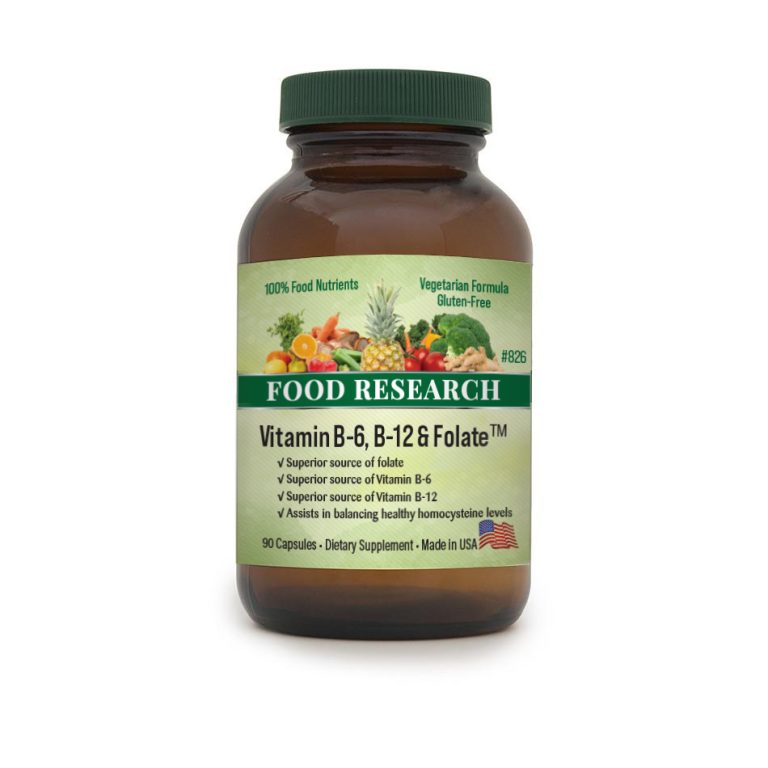
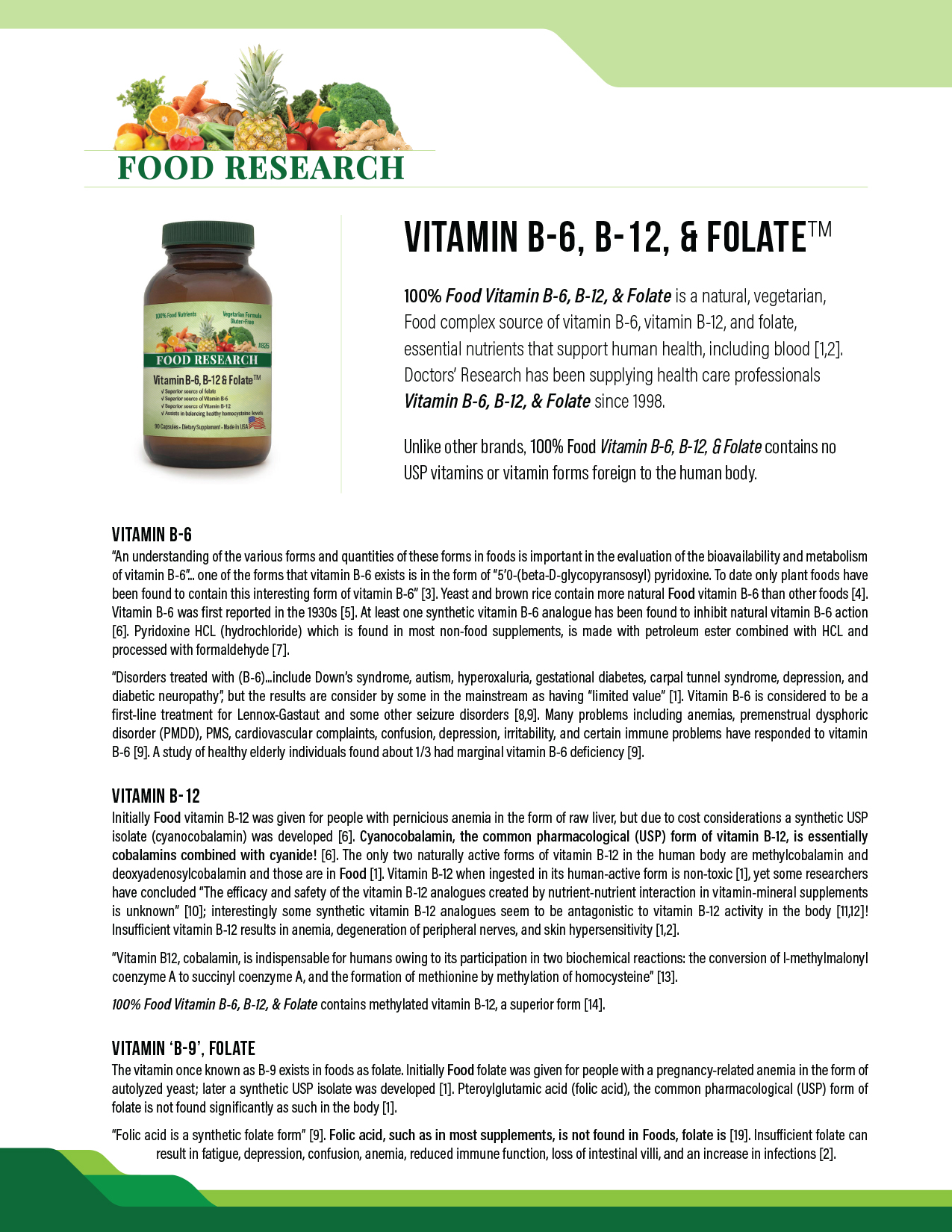
Vitamin B-6, B-12 & Folate™

Unlike other so-called “whole food” formulas, Vitamin B-6, B-12 & Folate™does not contain USP folic acid as that form is not what is found in natural foods.  Vitamins B6, B12, and B9 support healthy blood. B12 is essential for myelin synthesis and central nervous system function.

Unlike most so-called “natural” supplements, Vitamin B-6, B-12 & Folate™ does not contain any folic acid, which is a sythetic from of vitamin B-9 and is dangerous (for more details, please check out the article on Folic Acid Dangers)

Food  Vitamins and Minerals ARE Better!

Most multi-vitamin formulas are primarily synthetic (e.g. petroleum-derived) vitamins plus crushed industrial rocks, yet even peer reviewed medical research has concluded that food vitamins are superior to synthetics [1].

Numerous scientific papers have concluded that Food vitamins and minerals are better than USP isolated ‘nutrients’ because they contain important enzymes, peptides and phytonutrients which are critical to the utilization of vitamins and minerals and are lacking in isolated USP nutrients [e.g. 1,2].

References

[1] Shils ME, Olson JA, Shike M. Modern Nutrition in Health and Disease, 9th ed. Williams & Wilkins, Balt., 1999
[2] Whitney EN, Hamilton EMN. Understanding Nutrition, 4th ed. West Publishing, NY, 1987
[3] Leklem JE. Vitamin B6. In Modern Nutrition in Health and Disease, 8th ed. Lea & Febiger, Phil.,1994:383-394
[4] Ensminger AH, Ensminger ME, Konlade JE, Robson JRK. Food & Nutrition Encyclopedia, 2nd ed. CRC Press, New York, 1993
[5] Shils ME, et al. Modern Nutrition in Health and Disease, 10th ed. Lipponcott Williams & Wilkins, Balt., 2006
[6] Mervyn L. The B Vitamins. Thorsons, Wellingborough (UK), 1981
[7] Vitamin-Mineral Manufacturing Guide Nutrient Empowerment, volume 1. Nutrition Resource, Lakeport (CA), 1986
[8] Glauser TA, Morita DA. Encephalopathic epilepsy after infancy. In Pediatric Epilepsy, 2nd ed. Demos, New York, 2001:201-218
[9] Hendler SS, Rorvik D, eds. PDR for Nutritional Supplements. Medical Economics, Montvale (NJ), 2001
[10] Shils ME, Olson JA, Shike M. Modern Nutrition in Health and Disease, 8th ed. Lea & Febiger, Phil., 1994
[11] Ishida A, Kanefusa H, Fujita H, Toraya T. Microbiological activities in nucleotide loop-modified analogues of vitamin B12. Arch Microbiol 1994;161(4):293-299
[12] Tandler B, Krhenbul S, Brass EP. Unusual mitochondria in the hepatocytes of rats treated with a vitamin B12 analogue. Anat Rec 1994;231(1):1-6
[13] Moracova M, et al. Biological properties of vitamin B12. Nutr Res Rev. 2025 Jun;38(1):338-370
[14] Mather Y, Hazra AB. Methylations in vitamin B12 biosynthesis and catalysis. Curr Opin Struct Biol. 2022 Dec:77:102490
[15] Verhoef P. Homocysteine metabolism and risk of myocardial infarction: Relation with vitamin B6, B12, and Folate. Am J Epidemiol 1996;143(9):845-859
[16] Brattstrom L. Vitamins as homocysteine-lowering agents: A mini review. Presentation at The Experimental Biology 1995 AIN Colloquium, April 13, 1995, Atlanta Georgia
[17] Lucock M. Is folic acid the ultimate functional food component for disease prevention? BMJ, 2004;328:211-214
[18] Menezo Y. Folic Acid, Folinic Acid, 5 Methyl TetraHydroFolate Supplementation for Mutations That Affect Epigenesis through the Folate and One-Carbon Cycles. Biomolecules. 2022 Jan 24;12(2):197
[19] Macrae R, Robson RK, Sadler MJ. Encyclopedia of Food Science and Nutrition. Academic Press, NY, 1993
[20] Thiel R.  Folic Acid is Hazardous to Your Health.  What About Food Folate?  The Original Internist, 17(2) June 2010, 88-90; Thiel R. Is Folic Acid is Hazardous to Your Health? What About Food Folate? Monitor of Naturopathy, Spring 2025
[21] Gonzalez-Gross M, Marcos A, Pietrzik K. Nutrition and cognitive impairment in the elderly. Br J Nutr 2001;86:313-321
[22] Brown S, et al. High serum homocysteine appear to be a risk factor. Family Practice News May 1, 1995:25
[23] Null G. Superoxide Dismutase. In The Clinician’s Handbook of Natural Healing. Kensington Books, New York, 1997:137-144
[24] Romandini P, Bonotto C, Bertoloni G, Beltramini M, Salvato B. Superoxide dismutase, catalase and cell dimorphism in Candida albicans cells exposed to methanol and different temperature. Comp Biochem Physiol Pharm Toxicol Endocrinol,1994;108(1):53-57 [25] Thompson FE, et al. Sources of fiber and fat in the diets of U.S. women ages 19 to 50: implications for nutritional education and policy. Am J Pub Health 1992, 82(5):695-702
[26] Dietary fiber: importance of function as well as amount. Lancet 1992, 340:1133-1134
[27] Jensen B. The Chemistry of Man. Bernard Jensen, Escondido, 1983
[28] Nielsen FH. Ultratrace minerals. In Modern Nutrition in Health and Disease, 9th ed. Williams and Wilkins, Balt.;1999:283-303

All products distributed by Doctors’ Research, Inc. are nutritional and are not intended for the treatment or prevention of any medical conditions.

To Apply for Wholesale Account

or Call Us at (805) 489-7185
or Email Us at doctorsfoodresearch@gmail.com for more info.

The TRUTH About GLANDULARS In Nutritional Supplements

Some natural health products contain glandular ingredients and many doctors have used glandulars for years with great success.  Glandular organs, such as heart, aorta, and liver, have been a food source in the human diet for centuries. The consumption of glandulars is believed to provide nutritional support to the corresponding gland in the human body. Glandular organs contain food vitamins and minerals and were often used in the past to supply various nutrients.

Read More »

The Truth About Vitamins in Nutritional Supplements

For decades the ‘natural’ health industry has been touting thousands of vitamin supplements. The truth is that most vitamins in supplements are made or processed with petroleum derivatives or hydrogenated sugars. Even though they are often called natural, most non-food vitamins are isolated substances which are crystalline in structure.

Read More »

BEST SELLERS!

More Products

VEGETARIAN

GLANDULARS

VITAMINS & MINERALS

Posted on

Vitamin B-6, B-12 & Folate™ Article

Vitamin B-6, B-12, & Folate™

100% Food Vitamin B-6, B-12, & Folate is a natural, vegetarian, Food complex source of vitamin B-6, vitamin B-12, and folate, essential nutrients that support human health, including blood [1,2]. Doctors’ Research has been supplying health care professionals Vitamin B-6, B-12, & Folate since 1998.

Unlike other brands, 100% Food Vitamin B-6, B-12, & Folate contains no USP vitamins or vitamin forms foreign to the human body.

Vitamin B-6:
“An understanding of the various forms and quantities of these forms in foods is important in the evaluation of the bioavailability and metabolism of vitamin B-6”… one of the forms that vitamin B-6 exists is in the form of “5’0-(beta-D-glycopyransosyl) pyridoxine. To date only plant foods have been found to contain this interesting form of vitamin B-6” [3]. Yeast and brown rice contain more natural Food vitamin B-6 than other Foods [4]. Vitamin B-6 was first reported in the 1930s [5]. At least one synthetic vitamin B-6 analogue has been found to inhibit natural vitamin B-6 action [6]. Pyridoxine HCL (hydrochloride) which is found in most non-Food supplements, is made with petroleum ester combined with HCL and processed with formaldehyde [7].

“Disorders treated with (B-6)…include Down’s syndrome, autism, hyperoxaluria, gestational diabetes, carpal tunnel syndrome, depression, and diabetic neuropathy”, but the results are consider by some in the mainstream as having “limited value” [1]. Vitamin B-6 is considered to be a first-line treatment for Lennox-Gastaut and some other seizure disorders [8,9]. Many problems including anemias, premenstrual dysphoric disorder (PMDD), PMS, cardiovascular complaints, confusion, depression, irritability, and certain immune problems have responded to vitamin B-6 [9]. A study of healthy elderly individuals found about 1/3 had marginal vitamin B-6 deficiency [9].

Vitamin B-12:
Initially Food vitamin B-12 was given for people with pernicious anemia in the form of raw liver, but due to cost considerations a synthetic USP isolate (cyanocobalamin) was developed [6]. Cyanocobalamin, the common pharmacological (USP) form of vitamin B-12, is essentially cobalamins combined with cyanide! [6]. The only two naturally active forms of vitamin B-12 in the human body are methylcobalamin and deoxyadenosylcobalamin and those are in Food [1]. Vitamin B-12 when ingested in its human-active form is non-toxic [1], yet some researchers have concluded “The efficacy and safety of the vitamin B-12 analogues created by nutrient-nutrient interaction in vitamin-mineral supplements is unknown” [10]; interestingly some synthetic vitamin B-12 analogues seem to be antagonistic to vitamin B-12 activity in the body [11,12]! Insufficient vitamin B-12 results in anemia, degeneration of peripheral nerves, and skin hypersensitivity [1,2].

“Vitamin B12, cobalamin, is indispensable for humans owing to its participation in two biochemical reactions: the conversion of l-methylmalonyl coenzyme A to succinyl coenzyme A, and the formation of methionine by methylation of homocysteine” [13].

100% Food Vitamin B-6, B-12, & Folate contains methylated vitamin B-12, a superior form [14].

Vitamin ‘B-9’, Folate
The vitamin once known as B-9 exists in foods as folate. Initially Food folate was given for people with a pregnancy-related anemia in the form of autolyzed yeast; later a synthetic USP isolate was developed [1]. Pteroylglutamic acid (folic acid), the common pharmacological (USP) form of folate is not found significantly as such in the body [1].

“Folic acid is a synthetic folate form” [9]. Folic acid, such as in most supplements, is not found in Foods, folate is [19]. Insufficient folate can result in fatigue, depression, confusion, anemia, reduced immune function, loss of intestinal villi, and an increase in infections [2]. Folate deficiency is the most important determinant in high homocysteine levels [11], and supplemental folate is effective in reducing homocysteine [15,16]. “The highest concentrations of folate exist in yeast…” [1]. Insufficient folate can result in fatigue, depression, confusion, anemia, reduced immune function, loss of intestinal villi, and an increase in infections [2]. “(C)onsumption of more than 266 mcg of synthetic folic acid (PGA) results in absorption of unreduced PGA, which may interfere with folate metabolism for a period of years” [1].

A 2004 paper from the British Medical Journal confirmed what many natural health professional have known all along: since folic acid is unnatural and the body cannot fully convert large amounts of it into usable folate, this artificial substance can be absorbed and may have unknown negative consequences in the human body [17], folate supplementation obviously should be in Food folate forms and not folic acid!

Many scientists have concerns about folic acid [18]. High consumption of folic acid is dangerous [20].

Vitamins B-6, B-12, and Folate are all important nutrients for healthy blood; the absence of any of them can trigger various forms of anemia (especially pernicious anemia) [1,18]. Subclinical deficiencies in vitamin B-12, vitamin B-6, and folate may impair cognitive function [21].

Homocysteine responds to vitamin B-12 and folate [16]. Dr. Mason of Tufts University School of Medicine reports that a 20% elevation of homocysteine significantly increases the risk of cardiovascular disease [12]. Normal homocysteine level is about 12 umol/L, while cardiovascular risk increases about 14-16 umol/L [22]. In addition, even if blood tests for vitamin B-12 or folate appear to be normal, this may be because results are masked by an elevated level of homocysteine. Homocysteine is highly implicated in vascular diseases (such as cardiovascular and other vascular disorders), and can be reduced with sufficient vitamin B-12 and Folate; with vitamin B-6 sometimes playing a supporting role [16].

Superoxide Dismutase:
“Superoxide dismutase (S.O.D.) is one of the most important enzymes that function as cellular antioxidants…The absence of this enzyme is lethal” [1]. “It protects intracellular components from oxidative damage, converting the superoxide ion to hydrogen peroxide” [1]. S.O.D. is a powerful free radical scavenger which has been clinically shown to protect the brain, heart, liver, lungs, kidneys, skin, muscles, penis, nerves, and spinal cord from ischemic injury [23]. High levels of S.O.D. have been associated with reduced growth of Candida albicans [24]. 100% Food Vitamin B-6, B-12, and Folate naturally contains S.O.D.

Organic Brown Rice also a Food complex source of silicon and B vitamins [2,25-28].

Since Vitamin B-6, B-12& Folate contains only Foods, unlike other isolated supplements, it also naturally includes vitamin B-1 (thiamin), vitamin B-2 (riboflavin)vitamin B-3 (niacinamide), vitamin B-5 (pantothenate), choline, inositol, and other B vitamin factors which often work with vitamins B-6B-12, and folate in the body. All these factors make 100% Food Vitamin B-6, B-12& Folate the choice for doctors interested in truly natural health.

Many females simply take Vitamin B-6, B-12& Folate as a Food supplement to help them feel better.
Some of these studies (or citations) may not conform to peer review standards, therefore, the results are not conclusive. Professionals can, and often do, come to different conclusions when reviewing scientific data. None of these statements have been reviewed by the FDA. All products distributed by Doctors’ Research, Inc. are nutritional and are not intended for the treatment or prevention of any medical conditions.

Vitamin B-6, B-12 & Folate™

Unlike other so-called “whole food” formulas, Vitamin B-6, B-12 & Folate™does not contain USP folic acid as that form is not what is found in natural foods.  Vitamins B6, B12, and B9 support healthy blood. B12 is essential for myelin synthesis and central nervous system function.

Unlike most so-called “natural” supplements, Vitamin B-6, B-12 & Folate™ does not contain any folic acid, which is a sythetic from of vitamin B-9 and is dangerous (for more details, please check out the article on Folic Acid Dangers)

References

[1] Shils ME, Olson JA, Shike M. Modern Nutrition in Health and Disease, 9th ed. Williams & Wilkins, Balt., 1999
[2] Whitney EN, Hamilton EMN. Understanding Nutrition, 4th ed. West Publishing, NY, 1987
[3] Leklem JE. Vitamin B6. In Modern Nutrition in Health and Disease, 8th ed. Lea & Febiger, Phil.,1994:383-394
[4] Ensminger AH, Ensminger ME, Konlade JE, Robson JRK. Food & Nutrition Encyclopedia, 2nd ed. CRC Press, New York, 1993
[5] Shils ME, et al. Modern Nutrition in Health and Disease, 10th ed. Lipponcott Williams & Wilkins, Balt., 2006
[6] Mervyn L. The B Vitamins. Thorsons, Wellingborough (UK), 1981
[7] Vitamin-Mineral Manufacturing Guide Nutrient Empowerment, volume 1. Nutrition Resource, Lakeport (CA), 1986
[8] Glauser TA, Morita DA. Encephalopathic epilepsy after infancy. In Pediatric Epilepsy, 2nd ed. Demos, New York, 2001:201-218
[9] Hendler SS, Rorvik D, eds. PDR for Nutritional Supplements. Medical Economics, Montvale (NJ), 2001
[10] Shils ME, Olson JA, Shike M. Modern Nutrition in Health and Disease, 8th ed. Lea & Febiger, Phil., 1994
[11] Ishida A, Kanefusa H, Fujita H, Toraya T. Microbiological activities in nucleotide loop-modified analogues of vitamin B12. Arch Microbiol 1994;161(4):293-299
[12] Tandler B, Krhenbul S, Brass EP. Unusual mitochondria in the hepatocytes of rats treated with a vitamin B12 analogue. Anat Rec 1994;231(1):1-6
[13] Moracova M, et al. Biological properties of vitamin B12. Nutr Res Rev. 2025 Jun;38(1):338-370
[14] Mather Y, Hazra AB. Methylations in vitamin B12 biosynthesis and catalysis. Curr Opin Struct Biol. 2022 Dec:77:102490
[15] Verhoef P. Homocysteine metabolism and risk of myocardial infarction: Relation with vitamin B6, B12, and Folate. Am J Epidemiol 1996;143(9):845-859
[16] Brattstrom L. Vitamins as homocysteine-lowering agents: A mini review. Presentation at The Experimental Biology 1995 AIN Colloquium, April 13, 1995, Atlanta Georgia
[17] Lucock M. Is folic acid the ultimate functional food component for disease prevention? BMJ, 2004;328:211-214
[18] Menezo Y. Folic Acid, Folinic Acid, 5 Methyl TetraHydroFolate Supplementation for Mutations That Affect Epigenesis through the Folate and One-Carbon Cycles. Biomolecules. 2022 Jan 24;12(2):197
[19] Macrae R, Robson RK, Sadler MJ. Encyclopedia of Food Science and Nutrition. Academic Press, NY, 1993
[20] Thiel R.  Folic Acid is Hazardous to Your Health.  What About Food Folate?  The Original Internist, 17(2) June 2010, 88-90; Thiel R. Is Folic Acid is Hazardous to Your Health? What About Food Folate? Monitor of Naturopathy, Spring 2025
[21] Gonzalez-Gross M, Marcos A, Pietrzik K. Nutrition and cognitive impairment in the elderly. Br J Nutr 2001;86:313-321
[22] Brown S, et al. High serum homocysteine appear to be a risk factor. Family Practice News May 1, 1995:25
[23] Null G. Superoxide Dismutase. In The Clinician’s Handbook of Natural Healing. Kensington Books, New York, 1997:137-144
[24] Romandini P, Bonotto C, Bertoloni G, Beltramini M, Salvato B. Superoxide dismutase, catalase and cell dimorphism in Candida albicans cells exposed to methanol and different temperature. Comp Biochem Physiol Pharm Toxicol Endocrinol,1994;108(1):53-57 [25] Thompson FE, et al. Sources of fiber and fat in the diets of U.S. women ages 19 to 50: implications for nutritional education and policy. Am J Pub Health 1992, 82(5):695-702
[26] Dietary fiber: importance of function as well as amount. Lancet 1992, 340:1133-1134
[27] Jensen B. The Chemistry of Man. Bernard Jensen, Escondido, 1983
[28] Nielsen FH. Ultratrace minerals. In Modern Nutrition in Health and Disease, 9th ed. Williams and Wilkins, Balt.;1999:283-303

All products distributed by Doctors’ Research, Inc. are nutritional and are not intended for the treatment or prevention of any medical conditions.

To Apply for Wholesale Account

or Call Us at (805) 489-7185
or Email Us at doctorsfoodresearch@gmail.com for more info.

Diabetes: Types I and II

In the United States, the incidence of diabetes in adults rose by 33% from 1990 to 1998 and still appears to be on the rise.  Obesity is considered one of the major risk factors for diabetes, but that may be more due to dietary choices.

Read More »

BEST SELLERS!

More Products

VEGETARIAN

GLANDULARS

VITAMINS & MINERALS