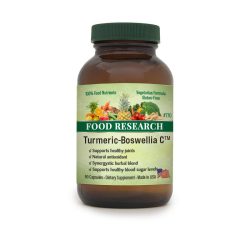
Microplastic and Nanoplastic Detoxification and Turmeric-Boswellia C

Microplastic and Nanoplastic Detoxification and Turmeric-Boswellia C

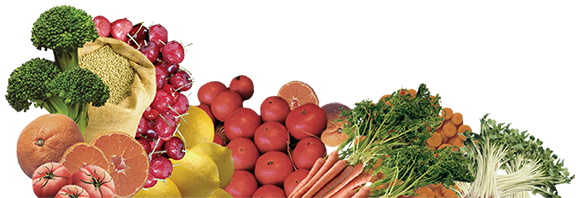
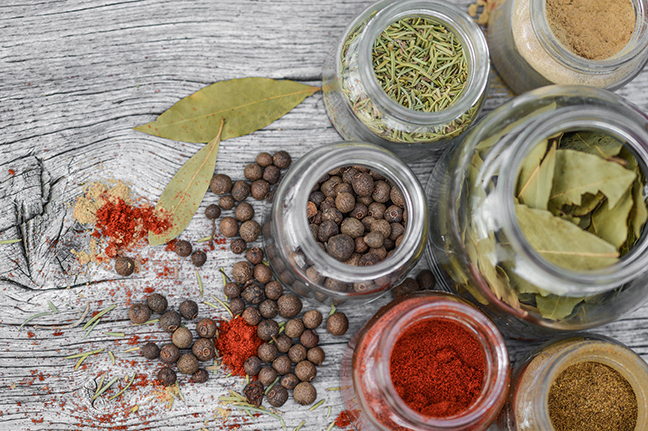
Executive summary: There are major concerns about microplastics and nanoplastics that enter into the human body orally and/or through breathing. Although there is no universally accepted way to detoxify the body of all of them, there are foods such as acerola cherries, fenugreek, ginger, boswellia, turmeric, and others that have been shown to support the reduction of inflammation and may support physiological defenses against oxidative or inflammatory stress associated with microplastic exposure. This is because of their:

  1. Nutrient components (vitamin C, quercetin, saponins),
  2. Containing of amphiphilic compounds that may form micelle-like structures during digestion,
  3. Ability to support bile metabolism,
  4. Ability to support liver and lymphatic detoxification, and
  5. Ability to prevent and/or remove oxidative damage (which can be an indirect result of plastic ingestion).

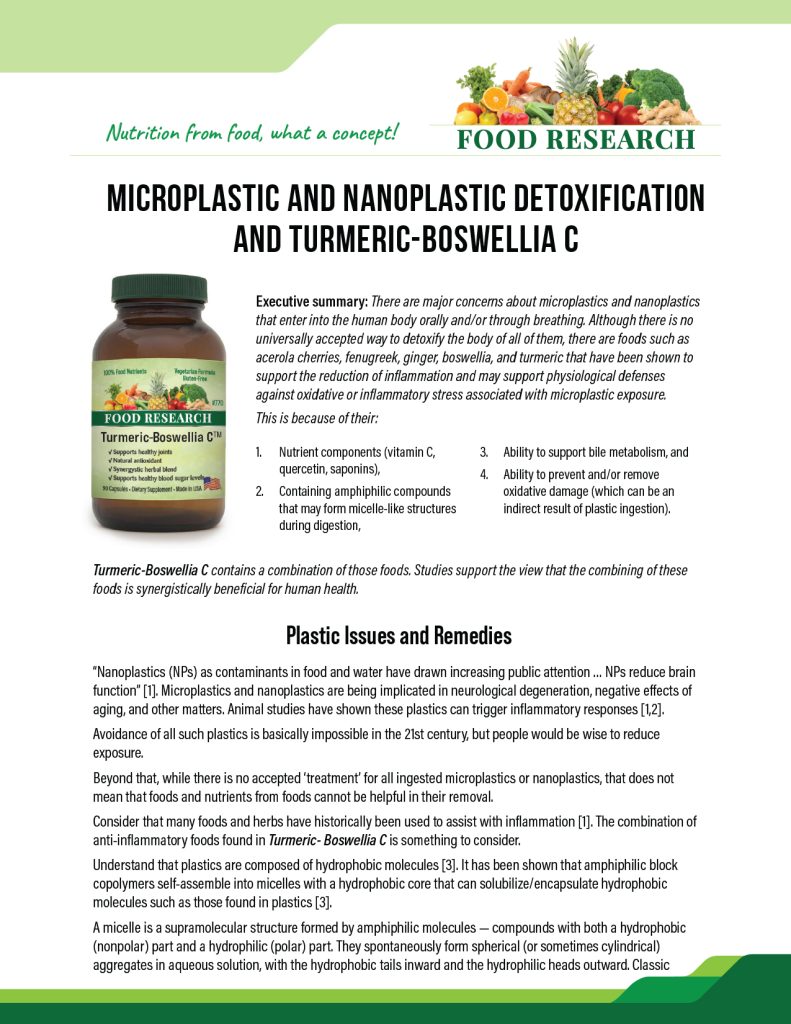
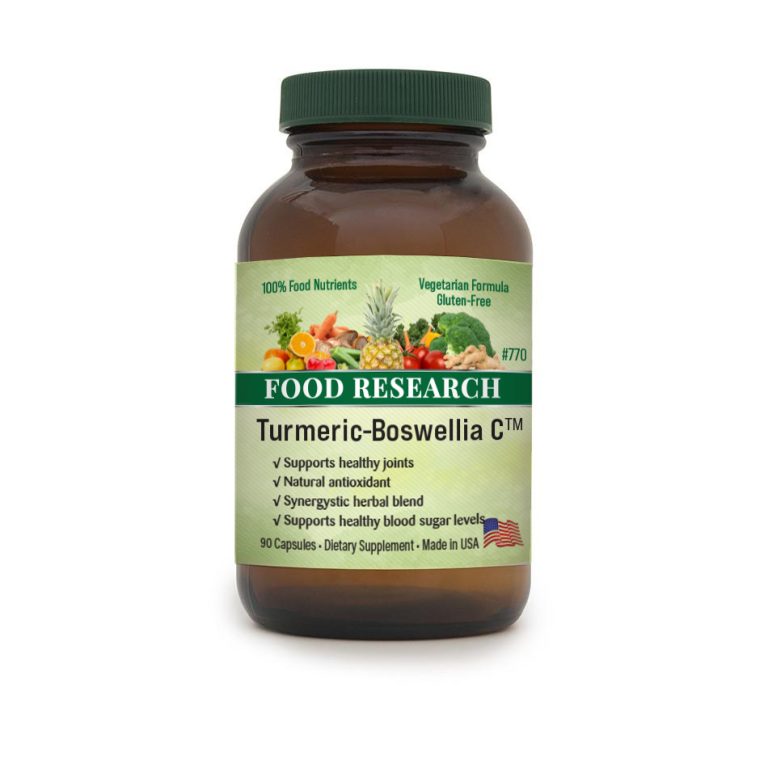
Turmeric Boswellia C contains a combination of foods with those properties. While precise mechanisms for removal of plastics in the human body are not fully understood, studies support the view that the combining of these foods is synergistically beneficial for detoxification and human health.

Turmeric-Boswellia C™ supplies herbs which have traditionally been used to support joint health and comfort. Some of the herbs also can support healthy blood sugar levels. 

Turmeric-Boswellia C™ is a synergistic blend of herbs which also supplies 100% Food vitamin C. These foods can aid in reducing inflammation and free radical damaged caused by enivronmental, microplastic, and other toxins.

Plastic Issues and Remedies

“Nanoplastics (NPs) as contaminants in food and water have drawn increasing public attention … NPs reduce brain function” [1]. Microplastics and nanoplastics are being implicated in neurological degeneration, negative effects of aging, and other matters. Animal studies have shown these plastics can trigger inflammatory responses [1,2].

Avoidance of all such plastics is basically impossible in the 21st century, but people would be wise to reduce exposure.

Beyond that, while there is no accepted ‘treatment’ for all ingested microplastics or nanoplastics, that does not mean that foods and nutrients from foods cannot be helpful in their removal or with any inflammation they may cause.

Consider that many foods and herbs have historically been used to assist with inflammation [1]. The combination of anti-inflammatory foods found in Turmeric- Boswellia C is something to consider.

Understand that plastics are composed of hydrophobic molecules [3]. It has been shown that amphiphilic block copolymers self-assemble into micelles with a hydrophobic core that can solubilize/encapsulate hydrophobic molecules such as those found in plastics [3].

A micelle is a supramolecular structure formed by amphiphilic molecules — compounds with both a hydrophobic (nonpolar) part and a hydrophilic (polar) part. They spontaneously form spherical (or sometimes cylindrical) aggregates in aqueous solution, with the hydrophobic tails inward and the hydrophilic heads outward. Classic examples include detergents, bile salts, phospholipids, and saponins.

While no foods literally contain amphiphilic micelles in the same structured form found in lab surfactant systems, many foods naturally form micelles during digestion, or contain molecules capable of forming micelles once mixed with bile or water–fat interfaces.

Foods such acerola cherries, fenugreek, ginger, boswellia, and turmeric have often been found to work better together than separately. Furthermore, they do contain molecules that can act amphiphilically and may form micelle-like or colloidal aggregates under certain conditions (especially in water or oil-water mixtures). So, while they don’t contain pre-formed micelles in the same sense as soap or bile, extracts from these plants can self-assemble into micelle-like colloids because of their natural amphiphilic compounds. This may account for the finding that some substances contained within them, like saponins which are in all of them (though most abundant in fenugreek), may influence microplastic aggregation, adsorption, and elimination [4].

Saponins are textbook amphiphilic molecules and form micelles that can encapsulate hydrophobic substances [5,6]—microplastics are hydrophobic substances. Although many microplastic particles are too large to be encapsulated in micelles, nanoplastics certainly can be. Other effects from saponins on larger microplastic particles would likely relate to surface adsorption or changes in aggregation, as opposed to true micelle entrapment.

Although many plastics/polymers are electrically neutral, their surface reactivity and leached chemicals can provoke oxidative stress. Thus, their presence in living organisms can result in oxidative damage [7]. Therefore, antioxidant containing foods (like acerola cherries) can help reduce, as well as “clean up,” some of that damage.

Acerola Cherries

Acerola cherries (Malpighia emarginata DC) are one of the richest natural sources of vitamin C and contain phytonutrients like carotenoids phenolics, anthocyanins, and flavonoids [8]. “The vitamin C produced by acerola is better absorbed by the human organism than synthetic ascorbic acid” [9]. The presence of functional phytochemicals in acerola has been shown to influence the intestinal epithelial cells to increase the cellular uptake of vitamin C as opposed to vitamin C alone [10]. “Acerola…contains bioflavonoids” [11], anthocyanins, and quercetin [12]. An animal study found that “acerola juice reduces low-grade inflammation” [13]. Vitamin C “occurs in the body in the form of ascorbate, known for its strong antioxidant and anti-inflammatory properties” [14]. Not only does vitamin C have free radical scavenging abilities, it also has been shown to increase the antioxidant abilities of some other foods [6]. Vitamin C has been shown to “reduce stress markers and inflammation by neutralizing harmful molecules, activating protective pathways, and regulating autophagy, providing potential protection” associated with microplastics [4]. Curcumin, which is a component of turmeric, tends to improve the anti-inflammatory traits of vitamin C [15]. Studies show that vitamin C can reduce toxicities [16]. Acerola cherries contain both vitamin C and bioflavonoids which work synergistically, whereas one study showed that vitamin C “acts synergistically to protect cutaneous tissue cells in culture against oxidative damage” [16].

An in vitro study performed at Doctors’ Research with a digital ORP meter demonstrated that a citrus food vitamin C has negative ORP, but that ascorbic acid had positive ORP [17]. It is negative ORP which better helps clean up oxidative damage [18]. Since ascorbic acid has positive ORP (as well as positive redox potential [19]), it can never replace food vitamin C. Thus, high vitamin C foods, such as acerola cherries, should be considered when plastic ingestion contributes to free radical damage.

Boswellia Gum

Boswellia Gum (Boswellia Serrata), also known as frankincense, has been shown to have anti-inflammatory and anti-oxidant properties [20,21]. An animal study it helpful against the effect of toxicants [22]. Boswellia’s anti-inflammatory and anti-oxidant properties may account for its protection against induced toxins [23]. “The gum exudate obtained from the bark of the tree B. serrata, also called Indian olibanum, has been … widely used in various formulations for the treatment of inflammation” [24]. Boswellia contains triterpenoids. Triterpenoids, although themselves highly hydrophobic, can form colloids in the presence of other amphiphilic compounds (e.g., phospholipids or surfactants in extracts) [25]. “For several thousand years (~4000) Boswellia serrata and Curcuma longa have been used in Aryuvedic medicine for treatment of various illnesses … which are mediated through pathways associated with inflammation … The anti-inflammatory effects of boswellic acids and curcumin have translated to … the improvement … as shown in numerous clinical trials” [26]. Other studies have also pointed to the synergistic benefit of combining boswellia and turmeric together [27]. Another paper concluded that boswellia and fenugreek worked well together [28].

Fenugreek

Fenugreek (Trigonella foenum graecum L.) (FG) is a plant … with … anti-inflammatory, anti-oxidant, … effects … evidence supports a role for fenugreek in protecting against … inflammation” [29]. It is approved by German Commission E for inflammation of the skin [20]. It has also been found to be helpful for dealing with toxins and inflammation of the lungs [30]. Fenugreek gum and Boswellia gum have been found to work synergistically [31]. Fenugreek contains quercetin [32]. Fenugreek also contains saponins [20]. Saponins in fenugreek can influence bile acid metabolism and lipid emulsification, which may aid in the detoxification of nanoplastics [33]. Fenugreek saponins, “After oral administration, with gentle stirring in the gastrointestinal fluids, they form micro- or nanoemulsions” [34]. Thus, that could also be why fenugreek can be helpful in detoxifying from nanoparticles substances like plastics.

Ginger Rhizome

Ginger Rhizome Zingiber officinale has anti-inflammatory effects [20]. “Scientific evidence supports the beneficial properties of ginger, including antioxidant and anti-inflammatory capacities” [35]. “Ginger, a well-known natural product, has been demonstrated to possess antioxidant, anti-inflammatory, properties” and supports “healthy aging” [36]. “Overall, eight RCTs reported the anti-inflammatory effect of ginger supplementation” [37]. On a totally different note, a randomized double-blind study found health benefits when fenugreek, ginger, and turmeric were combined [38]. An animal study found that ginger looked to help protect against toxic changes caused by a type of plastic [39]. Ginger aids with bile metabolism [40]. Since in vitro research suggests that bile salts potentially appear to assist in aggregation of micro and nano plastics [41], this may represent one pathway by which ginger could influence the processing or aggregation of plastic particles, and thus may be a way ginger assists in the removal of plastics in the body.

Turmeric

Turmeric (Curcuma longa) is a type of herb belonging to ginger family … Turmeric’s effects on health are generally centered upon an orange-yellow colored, lipophilic polyphenol substance called “curcumin,” which is acquired from the rhizomes of the herb. Curcumin is known to have antioxidant, anti-inflammatory, … effects [42]. “Turmeric has antihepatotoxic … and anti-inflammatory effects“ [20]. Curcuma longa (syn. C. domestica Valeton and C. brog Valeton) is also known as “turmeric” worldwide [43]. “In general, curcumin is beneficial to human health, demonstrating pharmacological activities of anti-inflammation and antioxidation” [44]. Curcumin in combination with boswellic acid is more effective “presumably due to synergistic effects of curcumin and boswellic acid” [45]. Turmeric compounds support “healthy aging” as they have helped prevent cellular damage [46] and may offer protective antioxidant activity against microplastic-induced stress [4]. A study including turmeric, ginger root, vitamin C, and boswellia extracts concluded there was efficacy of the blend [47]. Curcumin can form nanosized colloidal aggregates in aqueous media and in the presence of natural emulsifiers [48], hence that may explain turmeric’s aiding in the expulsion of microplastics.

Scientific research has concluded that the combinations of antioxidants such as vitamin C (which is in acerola cherries), quercetin (which is in acerola cherries and fenugreek) and curcumin (which is in turmeric) have been found to “reduce stress markers and inflammation by neutralizing harmful molecules, activating protective pathways, and regulating autophagy, providing potential protection” associated with microplastics [4].

Based on current scientific literature, ingredients such as turmeric, boswellia, fenugreek, ginger, black pepper, and acerola cherries provide synergistic antioxidant and anti-inflammatory support that may help mitigate some biological effects associated with microplastic exposure.

Adjunctive Products:

Liva-DeTox & Support, Herbal Antioxidant and Intestinal Support

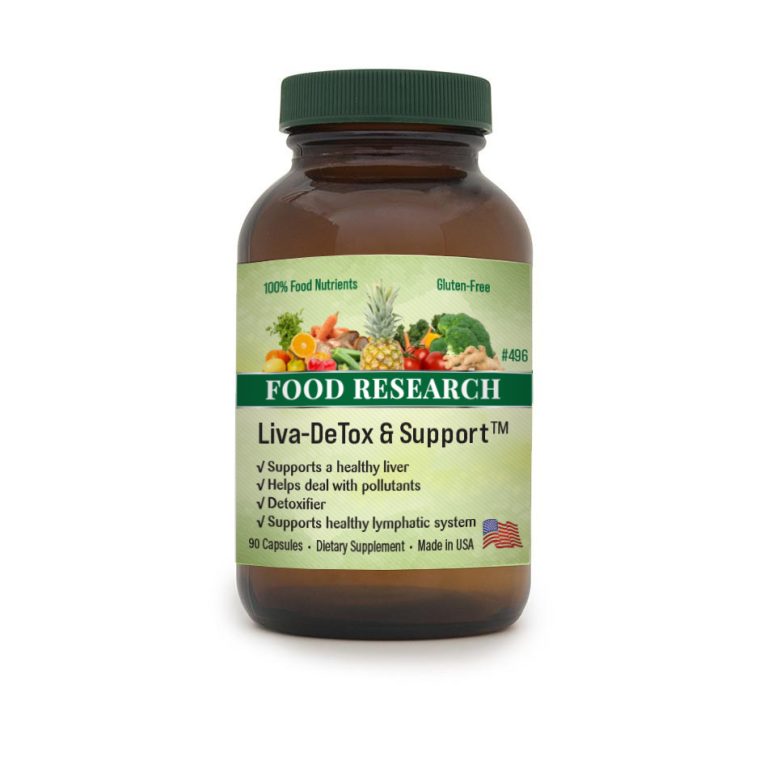
Dr. Mercola has written, “The liver also plays an essential role in clearing microplastics from the bloodstream — Specialized immune cells in the liver, known as Kupffer cells, help trap these foreign particles and route them into bile for elimination via the intestines.” [49]. “The basic functions of the liver can be divided into (1) its vascular functions for storage and filtration of the blood, (2), its metabolic functions concerned with the majority of the metabolic systems of the body, (3) its secretory and excretory functions…About 1100 milliliters of bloods flows from the portal vein and into the liver sinusoids each minute, and about an additional 350 milliliters flows into the sinusoids from the hepatic artery” [50]. The liver thus partially detoxifies the equivalent of all the blood in the body several times per hour. The liver contains Kupffer cells, which are large macrophages that can efficiently cleanse the blood [50]. Liva-DeTox & Support which contains bovine liver tissue provides nutrients traditionally associated with liver support [51]. Liva-DeTox & Support contains milk thistle which is a source of silymarin. Silymarin appears to be helpful as an adjunctive for inflammation and oxidative stress management, which may be relevant to microplastic exposure for potential plastic detoxification [52]. Liva-DeTox & Support also supplies beets and garlic. Garlic has anti-inflammatory uses, whereas beets are said “to have antihepatoxic effects…probably due to the herb’s concentration of betaine” [20].

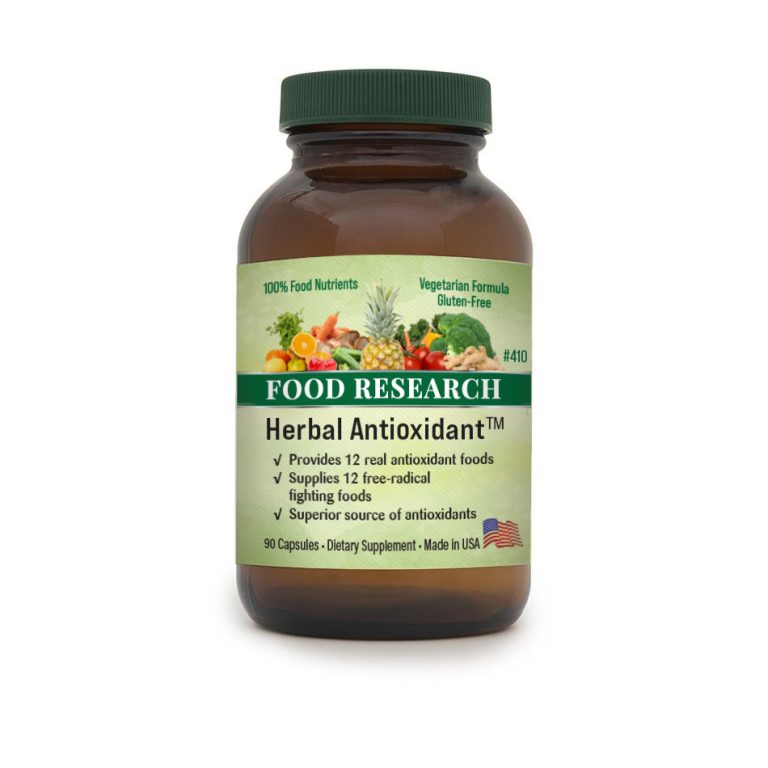
For additional antioxidant and detoxification support, consider Herbal Antioxidant. Herbal Antioxidant synergistically combines 12 antioxidant containing foods, including acerola cherries, ginger, milk thistle (silymarin source), and turmeric (curcumin source).

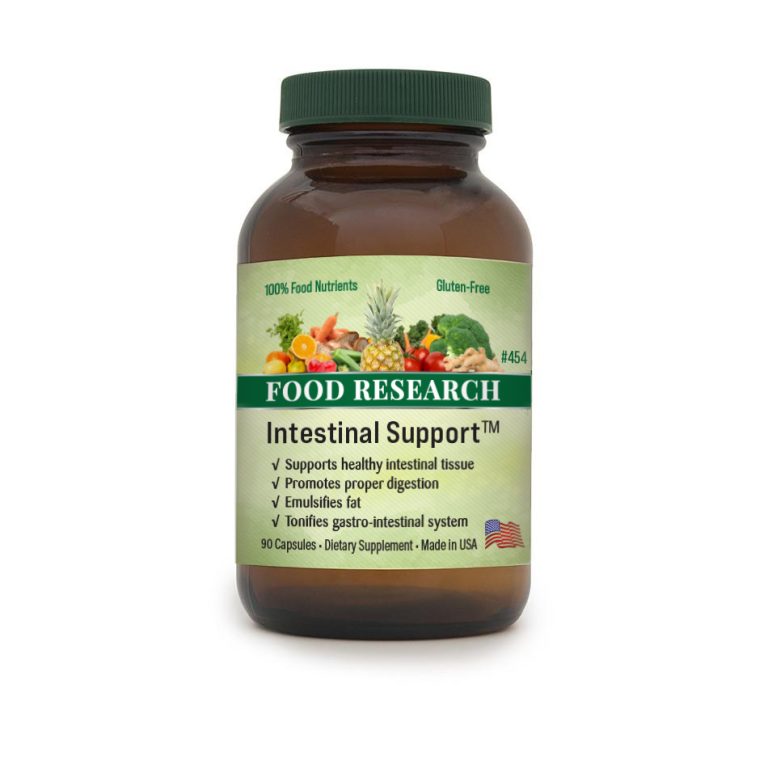
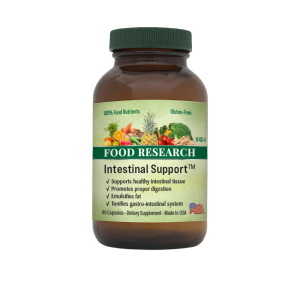
Also consider Intestinal Support, which includes bovine intestinal, lymphatic, and pancreatic tissue as well as collinsonia. An in vitro study involving rat derived intestinal epithelial tissue found that those tissues did uptake microplastics [53]. This lends support to the view that ingestion of bovine intestinal tissue may do the same thing, and as it would tend to be excreted, this could result in less microplastics remaining in the human body. Bovine pancreatic tissues naturally contain digestive enzymes. Lymphatic tissue contains macrophages [50]. Macrophages in the lymph nodes act as “clean-up” cells as they engulf and digest foreign particles that enter the lymph through lymphatic vessels. As oral consumption of bovine glands have long been considered by proponents to assist the organ they are related to in the human body [e.g. 54-56], it may be concluded that providing intestinal, lymphatic, and pancreatic tissue may help the excretion processes of intestines in humans. Collinsonia root (also known as stone root) which has long been used as an intestinal tonic and to aid against inflammation [20].

Yes, there is scientific evidence that ingredients in products such as Turmeric-Boswellia C, Liva-DeTox & Support, Herbal Antioxidant, and Intestinal Support should be considered to aid individuals who are concerned about ingested microplastics and nanoplastics.


Liva-DeTox & Support™ is a 100% Food supplement that is intended to supply nutrients, glandulars, and herbs needed to maintain and support optimal liver health. It supports detoxification from environmental and other toxins.

Liva-DeTox & Support™ naturally contains carbohydrates, lipids, and proteins (including all ten essential amino acids), and protein chaperones as found in the listed foods.

Herbal Antioxidants™ is a 100% vegan Food supplement that is intended to supply real antioxidant nutrients needed to maintain and support optimal health and protection from free radicals (including some caused by micro/nano plastic reactions).

Each of the antioxidant nutrients are 100% whole food and synergistically protect against a wide range of free radicals. Antioxidants are believed to help address the effects of aging, support healthy brain tissue, maintain capillary integrity, restore collagen strength, supports healthy skin, and maintain a healthy cardiovascular system.

Intestinal Support™ is a 100% Food supplement containing herbs and other glandulars to support intestinal and digestive health.

Intestines are involved in the digestion and absorption of nutrients as well as the excretion of waste. When they are not functioning well there can be digestive problems. If they are weak, hernias and/or colorectal issues sometimes develop. Bovine intestinal tissue provides peptides and enzymes to nutritionally support the intestines.

References

[1] Yang Q, et al. Oral feeding of nanoplastics affects brain function of mice by inducing macrophage IL-1 signal in the intestine. Cell Reports, Volume 42, Issue 4, 25 April 2023, 112346
[2] Bianchi M, et al. Biological Effects of Micro-/Nano-Plastics in Macrophages. Nanomaterials 2025, 15(5), 394; https://doi.org/10.3390/nano15050394
[3] Wang D, et al. Polymeric Micelles for the Delivery of Poorly Soluble Drugs: from Nanoformulation to Clinical Approval. Adv Drug Deliv Rev. 2020 Sep 24;156:80–118. doi: 10.1016/j.addr.2020.09.009
[4] Wang Z, et al. Antioxidant Intervention Against Microplastic Hazards. Antioxidants 2025, 14(7), 797
[5] Kim AV, et al. Mechanism of the enhancing effect of glycyrrhizin on nifedipine penetration through a lipid membrane. J Mol Liq. 2021 Dec 15:344:117759. doi: 10.1016/j.molliq.2021.117759
[6] Zhang J, et al. Saponin-Based Near-Infrared Nanoparticles with Aggregation-Induced Emission Behavior: Enhancing Cell Compatibility and Permeability. ACS Appl Bio Mater. 2019 Feb 18;2(2):943-951. doi: 10.1021/acsabm.8b00812
[7] Rui J. Exposure to Polypropylene Microplastics via Oral Ingestion Induces Colonic Apoptosis and Intestinal Barrier Damage through Oxidative Stress and Inflammation in Mice. Toxics. 2023 Jan 28;11(2):127. doi: 10.3390/toxics11020127
[8] Prakesh A, Baskaran R. Acerola, an untapped functional superfruit: a review on latest frontiers. J Food Sci Technol. 2018 Sep; 55(9): 3373–3384
[9] Assis SAD, Fernandes FP, Martins ABG, Oliveira OMMDF. Acerola: importance, culture conditions, production and biochemical aspects. Fruits. 2008;63(2):93–101; also published by Cambridge Press
[10] Takino Y, et al. Acerola (Malpighia emarginata DC.) Promotes Ascorbic Acid Uptake into Human Intestinal Caco-2 Cells via Enhancing the Gene Expression of Sodium-Dependent Vitamin C Transporter 1. J Nutr Sci Vitaminol (Tokyo). 2020;66(4):296-299

[11] Hwang J, Hodis HN, Sevanian A.  Soy and alfalfa phytoestrogen extracts become potent low-density lipoprotein antioxidants in the presence of acerola cherry extract. J Agric Food Chem. 2001;49(1):308-314
[12] Hanamura T, Mayama C, Aoki H, Hirayama Y, Shimizu M.  Antihyperglycemic effect of polyphenols from Acerola (Malpighia emarginata DC.) fruit.  Biosci Biotechnol Biochem. 2006 Aug;70(8):1813-20
[13] Dias FM, et al. Acerola (Malpighia emarginata DC.) juice intake protects against alterations to proteins involved in inflammatory and lipolysis pathways in the adipose tissue of obese mice fed a cafeteria diet. Lipids Health Dis. 2014; 13: 24
[14] Gegotek G, Skrzydlewska E.Antioxidative and Anti-Inflammatory Activity of Ascorbic Acid. Antioxidants (Basel). 2022 Oct; 11(10): 1993
[15] Chen L, et al. A Novel Combination of Vitamin C, Curcumin and Glycyrrhizic Acid Potentially Regulates Immune and Inflammatory Response Associated with Coronavirus Infections: A Perspective from System Biology Analysis. Nutrients. 2020 Apr; 12(4): 1193
[16] Hendler SS, Rorvik D. Pdr for Nutritional Supplementd, 2nd edition. Thomson Reuters, 2008
[17] Thiel R.  ORP Study on Food Vitamin C for Food Research LLC.  Doctors’ Research Inc., Arroyo Grande (CA), February 17, 2006
[18] Fowkes SW.  Antioxidants & reduction.  Smart Life News, 2000;7(9):6-8
[19] Budvari S, et al editors. The Merck Index: An encyclopedia of Chemicals, Drugs, and Biologicals, 12th ed.  Merck Research Laboratories, Whitehouse Station (NJ), 1996
[20] Gruenwald J, Brendler T, Jaenicke C, editors. PDR for Herbal Medicines, 4th ed.  Thomson, Montvale (NJ), 2007
[21] Beghelli D, et al. Antioxidant and Ex Vivo Immune System Regulatory Properties of Boswellia serrata Extracts. Oxid Med Cell Longev. 2017; 2017: 7468064
[22] Alyahya A, Asad M. Repeated 28-DAY oral dose study on Boswellia sacra oleo gum resin extract for testicular toxicity in rats. J Ethnopharmacol. 2020 Aug 10:258:112890. doi: 10.1016/j.jep.2020.112890
[23] Rahimi VB, et al. Boswellia serrata inhibits LPS-induced cardiotoxicity in H9c2 cells: Investigating role of anti-inflammatory and antioxidant effects. Toxicon. 2023 Jun 15:229:107132. doi: 10.1016/j.toxicon.2023.107132
[24] Almeida-da-Silva CL, et al. Effects of Frankincense Compounds on Infection, Inflammation, and Oral Health. Molecules. 2022 Jul; 27(13): 4174
[25] Cometa S, et al. Effectiveness of gellan gum scaffolds loaded with Boswellia serrata extract for in-situ modulation of pro-inflammatory pathways affecting cartilage healing. Int J Biol Macromol. 2024 Oct;277(Pt 1):134079. doi: 10.1016/j.ijbiomac.2024.134079
[26] Septhi V. Potential complementary and/or synergistic effects of curcumin and boswellic acids for management of osteoarthritis. Ther Adv Musculoskelet Dis. 2022; 14
[27] Bannuru RR, et al. Efficacy of Curcumin and Boswellia for Knee Osteoarthritis: Systematic Review and Meta-Analysis. Semin Arthritis Rheum. 2018 Dec; 48(3): 416–429
[28] Chattopadhyay K, et al. Effectiveness and Safety of Ayurvedic Medicines in Type 2 Diabetes Mellitus Management: A Systematic Review and Meta-Analysis. Front Pharmacol. 2022 Jun 8;13:821810
[29] Knott EJ, et al. Fenugreek supplementation during high-fat feeding improves specific markers of metabolic health. Sci Rep. 2017; 7: 12770
[30] Abdrabouh A. Inflammatory and proapoptotic effects of inhaling gasoline fumes on the lung and ameliorative effects of fenugreek seeds. Sci Rep. 2022; 12: 14446
[31] Kumar RV, Sinha VR. A novel synergistic galactomannan-based unit dosage form for sustained release of acarbose. AAPS PharmSciTech . 2012 Mar;13(1):262-75
[32] Drugs and Lactation Database (LactMed®) [Internet]. Bethesda (MD): National Institute of Child Health and Human Development; 2006.2025 Jul 15
[33] Shao Z, et al. Aggregation kinetics of polystyrene nanoplastics in gastric environments: Effects of plastic properties, solution conditions, and gastric constituents. Environment International, Volume 170, December 2022, 107628
[34] Sinka D, et al. Formulation, Characterization and Permeability Studies of Fenugreek (Trigonella foenum-graecum) Containing Self-Emulsifying Drug Delivery System (SEDDS). Molecules. 2022 Apr 29;27(9):2846. doi: 10.3390/molecules27092846
[35] Ballester P, et al. Effect of Ginger on Inflammatory Diseases. Molecules. 2022 Nov; 27(21): 7223
[36] Ozkur M. Ginger for Healthy Ageing: A Systematic Review on Current Evidence of Its Antioxidant, Anti-Inflammatory, and Anticancer Properties.Oxid Med Cell Longev. 2022; 2022: 4748447
[37] Anh NH, et al. Ginger on Human Health: A Comprehensive Systematic Review of 109 Randomized Controlled Trials. Nutrients. 2020 Jan; 12(1): 157
[38] Bumrungpert A, et al. Effects of Fenugreek, Ginger, and Turmeric Supplementation on Human Milk Volume and Nutrient Content in Breastfeeding Mothers: A Randomized Double-Blind Controlled Trial. Breastfeed Med. 2018 Nov 9. doi: 10.1089
[39] Denwer S, et. al. The possible protective effect of ginger extract on toxic changes induced by bisphenol A on the thyroid gland of adult male albino rats: light and electron microscopic study. Ultrastruct Pathol. 2024 Nov;48(6):445-475. doi: 10.1080/01913123.2024.2395849
[40] Yu Y, et al. Dry ginger and Schisandra chinensis modulate intestinal flora and bile acid metabolism to treatment asthma. Front Microbiol. 2025 Mar 27:16:1541335. doi: 10.3389/fmicb.2025.1541335
[41] Shao Z, et al. Aggregation kinetics of polystyrene nanoplastics in gastric environments: Effects of plastic properties, solution conditions, and gastric constituents. Environment International, Volume 170, December 2022, 107628
[42] Kocaadam B, Şanlier N. Curcumin, an active component of turmeric (Curcuma longa), and its effects on health. Crit Rev Food Sci Nutr. 2017 Sep 2;57(13):2889-2895
[43] Dosoky NS, Setzer W. Chemical Composition and Biological Activities of Essential Oils of Curcuma Species. Nutrients. 2018 Sep; 10(9): 1196
[44] Liu S, et al. A Comprehensive Review on the Benefits and Problems of Curcumin with Respect to Human Health. Molecules. 2022 Jul; 27(14): 4400
[45] Haroyan A, et al. Efficacy and safety of curcumin and its combination with boswellic acid in osteoarthritis: a comparative, randomized, double-blind, placebo-controlled study. BMC Complement Altern Med. 2018; 18: 7
[46] Rahman M, et al. Curcuma longa L. Prevents the Loss of β-Tubulin in the Brain and Maintains Healthy Aging in Drosophila melanogaster. Mol Neurobiol. 2022; 59(3): 1819–1835
[47] Bharat TB, et al. Ingredients of a Natural Oral Nutritional Supplement and Their Role in the Treatment of Osteoarthritis. Clin Med Insights Arthritis Musculoskelet Disord. 2022 Mar 25;15:11795441211063365
[48] Moutas S, et al. Curcumin-decorated nanoliposomes with very high affinity for amyloid-β1-42 peptide. Biomaterials. 2011 Feb;32(6):1635-45. doi: 10.1016/j.biomaterials.2010.10.027
[49] Mercola J. Study Finds Widespread Microplastics in Reproductive Fluids, What It Means for Fertility. Mercola.com, September 29, 2025
[50] Guyton AC, Hall JE. Textbook of Medical Physiology, 9th ed. WB Saunders, Phil., 1996
[51] Profiles in Nutritional Progress.  Rubicon Productions, Bakersfield, 1993
[52] Elsheikh A, et al. Polystyrene microplastic particles induced hepatotoxic injury via pyroptosis, oxidative stress, and fibrotic changes in adult male albino rats; the therapeutic role of silymarin. Toxicol Mech Methods. 2023 Nov;33(6):512-528. doi: 10.1080/15376516.2023.2191270
[53] Sofield CE, et al. Digestion of microplastics with simulated gastrointestinal conditions mitigates uptake by intestinal epithelial cells: Quantified by imaging flow cytometry. Journal of Hazardous Materials Volume 498, 15 October 2025, 139816
[54] Burns D. Accumulating scientific evidence supports glandular therapy.  The Digest of Chiropractic Economics, Nov/Dec 1987: 74-79
[55] Schwartz EF. Glandular therapy.  The American Chiropractor, January/February 1983:14-18
[56] Profiles in Nutritional Progress.  Rubicon Productions, Bakersfield, 1993

This document is intended solely for the use of health care professionals. It has not been evaluated by the US FDA or any other governmental authority. Scientists can, and do, often come to differing conclusions when looking at data and reports.

To Apply for Wholesale Account

or Call Us at (805) 489-7185
or Email Us at doctorsfoodresearch@gmail.com for more info.

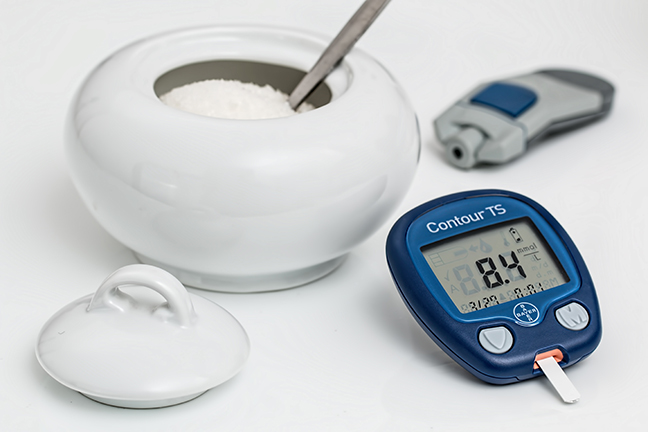
Diabetes: Types I and II

In the United States, the incidence of diabetes in adults rose by 33% from 1990 to 1998 and still appears to be on the rise.  Obesity is considered one of the major risk factors for diabetes, but that may be more due to dietary choices.

Read More »

BEST SELLERS!

More Products

VEGETARIAN

GLANDULARS

VITAMINS & MINERALS

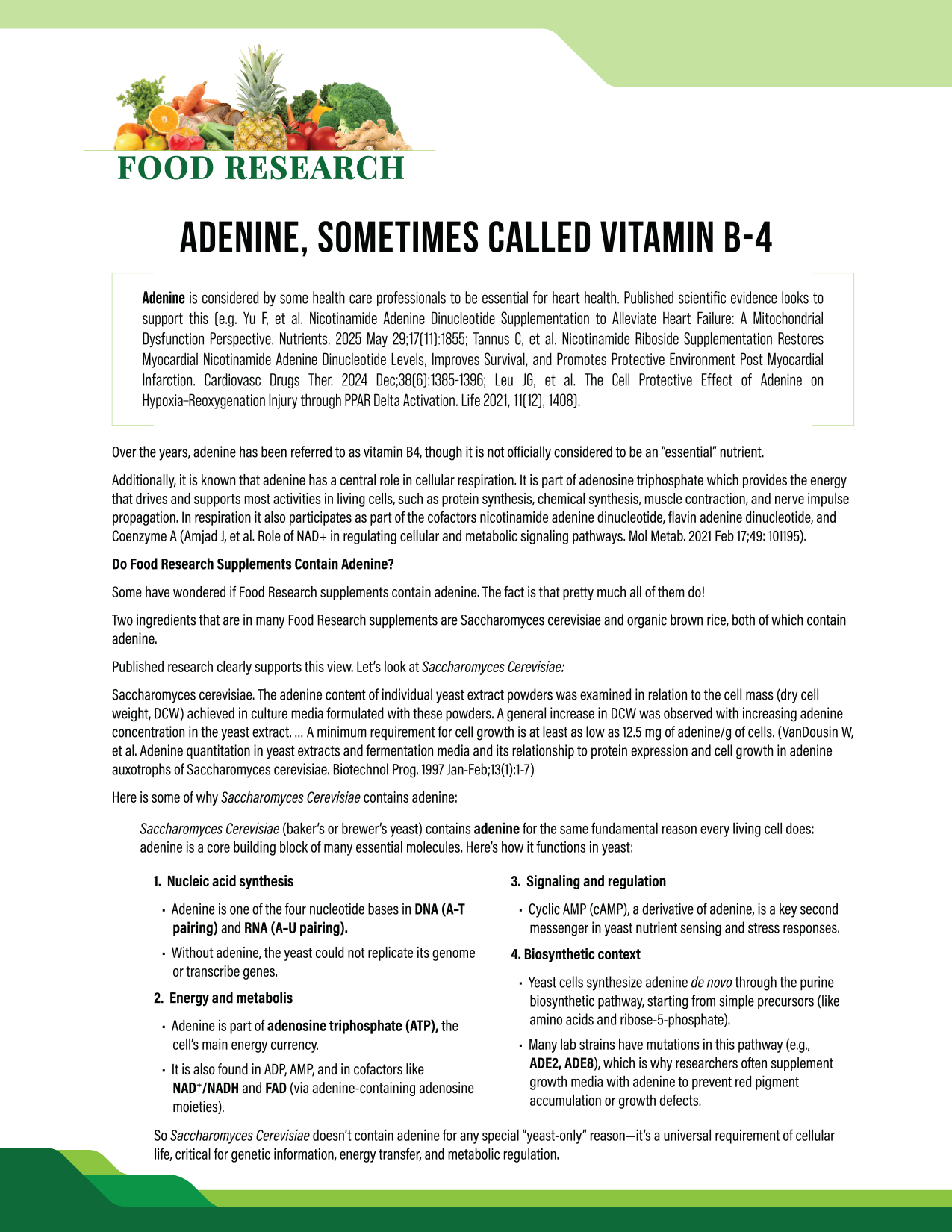
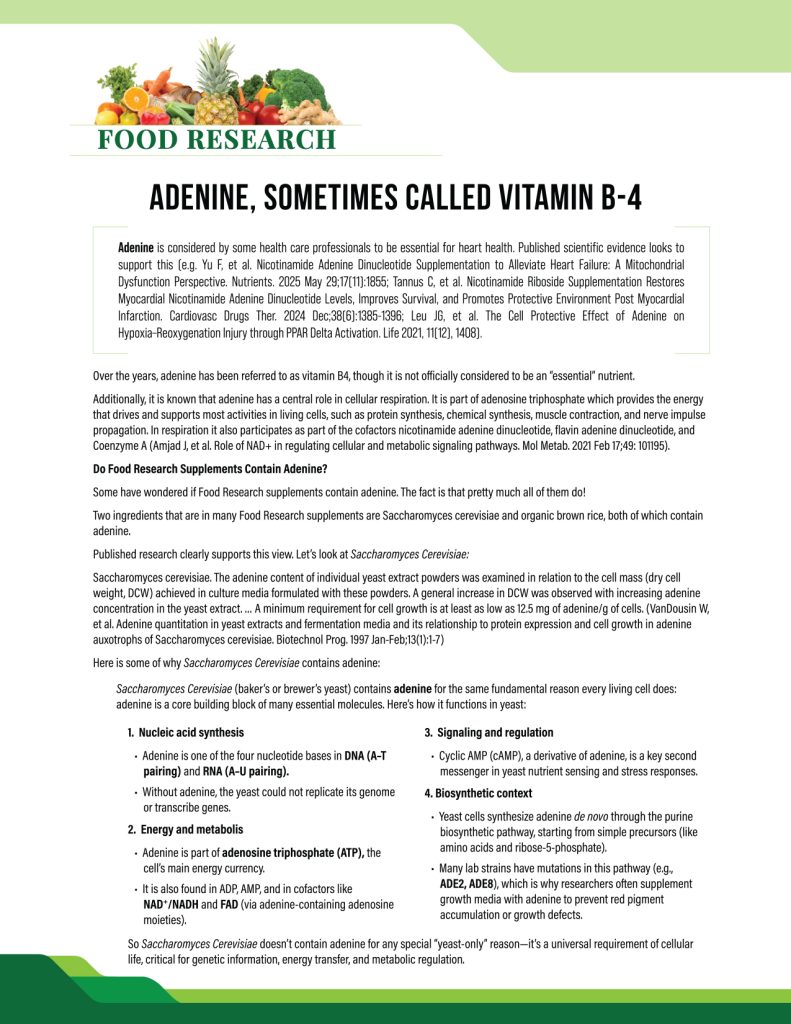
Adenine – Sometimes Called Vitamin B-4

Adenine, Sometimes Called Vitamin B-4

Most Food Research products contain what is called Vitamin B-4, AdenineAdenine is considered by some health care professionals to be essential for heart health.

Published scientific evidence looks to support this (e.g. Yu F, et al. Nicotinamide Adenine Dinucleotide Supplementation to Alleviate Heart Failure: A Mitochondrial Dysfunction Perspective. Nutrients. 2025 May 29;17(11):1855; Tannus C, et al. Nicotinamide Riboside Supplementation Restores Myocardial Nicotinamide Adenine Dinucleotide Levels, Improves Survival, and Promotes Protective Environment Post Myocardial Infarction. Cardiovasc Drugs Ther. 2024 Dec;38(6):1385-1396; Leu JG, et al. The Cell Protective Effect of Adenine on Hypoxia–Reoxygenation Injury through PPAR Delta Activation. Life 2021, 11(12), 1408).

Over the years, adenine has been referred to as vitamin B-4, though it is not officially considered to be an “essential” nutrient.

Additionally, it is known that adenine has a central role in cellular respiration. It is part of adenosine triphosphate which provides the energy that drives and supports most activities in living cells, such as protein synthesis, chemical synthesis, muscle contraction, and nerve impulse propagation. In respiration it also participates as part of the cofactors nicotinamide adenine dinucleotide, flavin adenine dinucleotide, and Coenzyme A (Amjad J, et al. Role of NAD+ in regulating cellular and metabolic signaling pathways. Mol Metab. 2021 Feb 17;49: 101195).

Do Food Research Supplements Contain Adenine?

Some have wondered if Food Research supplements contain adenine. The fact is that pretty much all of them do!

Two ingredients that are in many Food Research supplements are Saccharomyces cerevisiae and organic brown rice, both of which contain adenine.

Published research clearly supports this view. Let’s look at Saccharomyces cerevisiae:

Saccharomyces cerevisiae. The adenine content of individual yeast extract powders was examined in relation to the cell mass (dry cell weight, DCW) achieved in culture media formulated with these powders. A general increase in DCW was observed with increasing adenine concentration in the yeast extract. … A minimum requirement for cell growth is at least as low as 12.5 mg of adenine/g of cells. (VanDousin W, et al. Adenine quantitation in yeast extracts and fermentation media and its relationship to protein expression and cell growth in adenine auxotrophs of Saccharomyces cerevisiae. Biotechnol Prog. 1997 Jan-Feb;13(1):1-7)

Here is some of why Saccharomyces cerevisiae contains adenine:

Saccharomyces cerevisiae (baker’s or brewer’s yeast) contains adenine for the same fundamental reason every living cell does: adenine is a core building block of many essential molecules. Here’s how it functions in yeast:

  1. Nucleic acid synthesis
  • Adenine is one of the four nucleotide bases in DNA (A–T pairing) and RNA (A–U pairing).
  • Without adenine, the yeast could not replicate its genome or transcribe genes.
  1. Energy and metabolism
  • Adenine is part of adenosine triphosphate (ATP), the cell’s main energy currency.
  • It is also found in ADP, AMP, and in cofactors like NAD⁺/NADH and FAD (via adenine-containing adenosine moieties).
  1. Signaling and regulation
  • Cyclic AMP (cAMP), a derivative of adenine, is a key second messenger in yeast nutrient sensing and stress responses.
  1. Biosynthetic context
  • Yeast cells synthesize adenine de novo through the purine biosynthetic pathway, starting from simple precursors (like amino acids and ribose-5-phosphate).
  • Many lab strains have mutations in this pathway (e.g., ADE2, ADE8), which is why researchers often supplement growth media with adenine to prevent red pigment accumulation or growth defects.

So Saccharomyces cerevisiae doesn’t contain adenine for any special “yeast-only” reason—it’s a universal requirement of cellular life, critical for genetic information, energy transfer, and metabolic regulation.

It should be added that Saccharomyces cerevisiae has a higher concentration of adenine than wheat germ or organic brown rice.

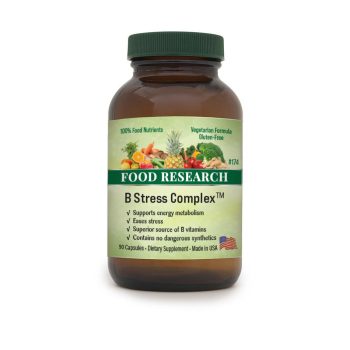
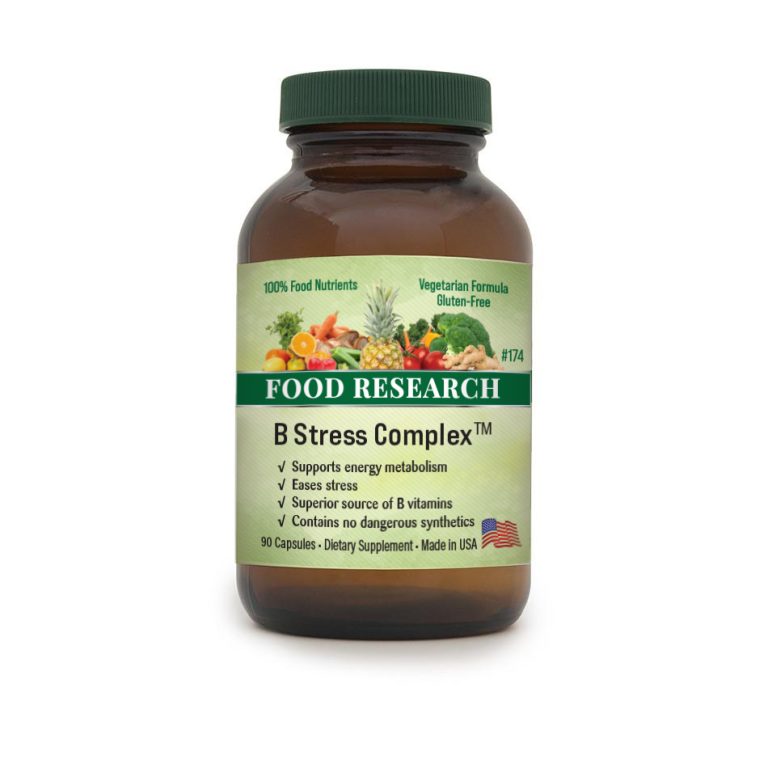
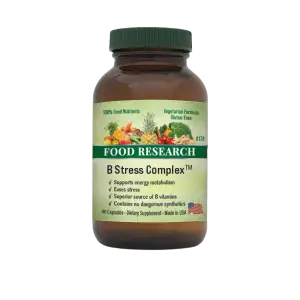
At Doctors’ Research we wondered how much adenine would be in 521 mg of Saccharomyces cerevisiae, which is the minimum amount contained in Food Research’s B Stress Complex.

There isn’t a single fixed number, because the adenine content varies. But we can make a reasonable ball-park estimate from typical yeast composition.

  1. Find nucleic-acid content

Published analyses of dried baker’s yeast report roughly:

  • RNA: 5–10 % of dry weight (yeast is RNA-rich).
  • DNA: ~0.5 % of dry weight.

Let’s take a midrange total nucleic acid content ≈ 7 % of dry mass.

For 521 mg dry weight:

  • Total nucleic acids ≈ 0.07 × 521 mg ≈ 36 mg.
  1. Fraction of adenine bases

In RNA (adenine, cytosine, guanine, uracil) → ~25 % adenine by base count.
In DNA (adenine, thymine, cytosine, guanine) → ~25 % adenine.

So adenine bases ≈ 0.25 × 36 mg ≈ 9 mg (as the free base equivalent).

  1. Add other adenine-containing molecules

Yeast also contains ATP, NAD⁺, FAD, etc., but those pools are small compared with the bulk RNA. That might add perhaps another milligram or two of adenine equivalents.

Estimated range

≈ 8–12 mg of adenine (as free base) in 521 mg dried yeast
—roughly 1.5–2 % of the dry weight.

This is only a biochemical back-of-the-envelope figure.
Different growth phases, extraction methods, or definitions (free vs. bound adenine) can shift the result, but it gives you the right order of magnitude.

So, that is what we came up with independently.

Since the Saccharomyces cerevisiae in B Stress Complex comes from the Grow Company, we asked it for an ingredient by ingredient analysis. For all of the amounts claimed on the label, Grow estimated that there would be between 4.6 to 15.4 mg of adenine per capsule in B Stress Complex (Tical A. Adenine. Calculation Report, September 25, 2025).

However, since Food Research actually puts 10% more Grow nutrients than the B Stress Complex label states (for purposes of supporting the “Best Buy” date), then the range actually would appear to be 5.1 to 16.9 mg per capsule.

So, yes, the fact is that B Stress Complex , as well as many other Food Research supplements, contain a substantial amount of adenine, also sometimes called vitamin B-4.

Do not let anyone try to convince you otherwise.

Some of these studies (or citations) may not conform to peer review standards, therefore, the results are not conclusive. Professionals can, and often do, come to different conclusions when reviewing scientific data. None of these statements have been reviewed by the FDA. All products distributed by Doctors’ Research, Inc. are nutritional and are not intended for the treatment or prevention of any medical conditions.

B Stress Complex™ naturally contains carbohydrates, lipids, proteins (including all ten essential amino acids), and superoxide dismutase as found in specially grown, enzymatically processed Saccharomyces cerevisiae, and organic brown rice. 

Unlike many so-called “natural” formulas, B Stress Complex™  formula contains no synthetic USP nutrients or isolated mineral salts, but only contains foods, food complexes, and food concentrates.

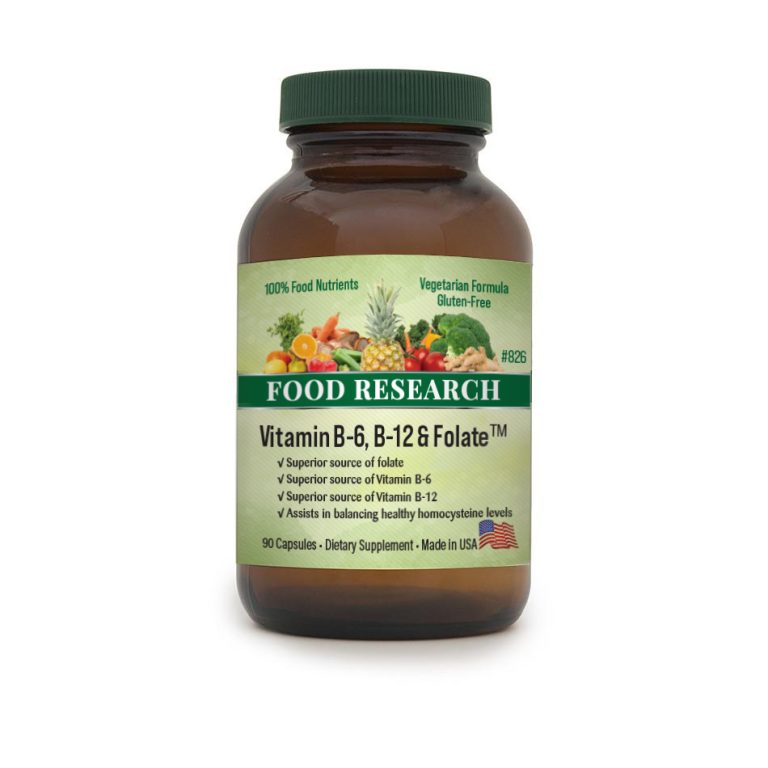
Vitamin B-6, B-12 & Folate™

Unlike other so-called “whole food” formulas, Vitamin B-6, B-12 & Folate™does not contain USP folic acid as that form is not what is found in natural foods.  Vitamins B6, B12, and B9 support healthy blood. B12 is essential for myelin synthesis and central nervous system function.

Unlike most so-called “natural” supplements, Vitamin B-6, B-12 & Folate™ does not contain any folic acid, which is a sythetic from of vitamin B-9 and is dangerous (for more details, please check out the article on Folic Acid Dangers)

References

[1] Shils ME, Olson JA, Shike M. Modern Nutrition in Health and Disease, 9th ed. Williams & Wilkins, Balt., 1999
[2] Whitney EN, Hamilton EMN. Understanding Nutrition, 4th ed. West Publishing, NY, 1987
[3] Leklem JE. Vitamin B6. In Modern Nutrition in Health and Disease, 8th ed. Lea & Febiger, Phil.,1994:383-394
[4] Ensminger AH, Ensminger ME, Konlade JE, Robson JRK. Food & Nutrition Encyclopedia, 2nd ed. CRC Press, New York, 1993
[5] Shils ME, et al. Modern Nutrition in Health and Disease, 10th ed. Lipponcott Williams & Wilkins, Balt., 2006
[6] Mervyn L. The B Vitamins. Thorsons, Wellingborough (UK), 1981
[7] Vitamin-Mineral Manufacturing Guide Nutrient Empowerment, volume 1. Nutrition Resource, Lakeport (CA), 1986
[8] Glauser TA, Morita DA. Encephalopathic epilepsy after infancy. In Pediatric Epilepsy, 2nd ed. Demos, New York, 2001:201-218
[9] Hendler SS, Rorvik D, eds. PDR for Nutritional Supplements. Medical Economics, Montvale (NJ), 2001
[10] Shils ME, Olson JA, Shike M. Modern Nutrition in Health and Disease, 8th ed. Lea & Febiger, Phil., 1994
[11] Ishida A, Kanefusa H, Fujita H, Toraya T. Microbiological activities in nucleotide loop-modified analogues of vitamin B12. Arch Microbiol 1994;161(4):293-299
[12] Tandler B, Krhenbul S, Brass EP. Unusual mitochondria in the hepatocytes of rats treated with a vitamin B12 analogue. Anat Rec 1994;231(1):1-6
[13] Moracova M, et al. Biological properties of vitamin B12. Nutr Res Rev. 2025 Jun;38(1):338-370
[14] Mather Y, Hazra AB. Methylations in vitamin B12 biosynthesis and catalysis. Curr Opin Struct Biol. 2022 Dec:77:102490
[15] Verhoef P. Homocysteine metabolism and risk of myocardial infarction: Relation with vitamin B6, B12, and Folate. Am J Epidemiol 1996;143(9):845-859
[16] Brattstrom L. Vitamins as homocysteine-lowering agents: A mini review. Presentation at The Experimental Biology 1995 AIN Colloquium, April 13, 1995, Atlanta Georgia
[17] Lucock M. Is folic acid the ultimate functional food component for disease prevention? BMJ, 2004;328:211-214
[18] Menezo Y. Folic Acid, Folinic Acid, 5 Methyl TetraHydroFolate Supplementation for Mutations That Affect Epigenesis through the Folate and One-Carbon Cycles. Biomolecules. 2022 Jan 24;12(2):197
[19] Macrae R, Robson RK, Sadler MJ. Encyclopedia of Food Science and Nutrition. Academic Press, NY, 1993
[20] Thiel R.  Folic Acid is Hazardous to Your Health.  What About Food Folate?  The Original Internist, 17(2) June 2010, 88-90; Thiel R. Is Folic Acid is Hazardous to Your Health? What About Food Folate? Monitor of Naturopathy, Spring 2025
[21] Gonzalez-Gross M, Marcos A, Pietrzik K. Nutrition and cognitive impairment in the elderly. Br J Nutr 2001;86:313-321
[22] Brown S, et al. High serum homocysteine appear to be a risk factor. Family Practice News May 1, 1995:25
[23] Null G. Superoxide Dismutase. In The Clinician’s Handbook of Natural Healing. Kensington Books, New York, 1997:137-144
[24] Romandini P, Bonotto C, Bertoloni G, Beltramini M, Salvato B. Superoxide dismutase, catalase and cell dimorphism in Candida albicans cells exposed to methanol and different temperature. Comp Biochem Physiol Pharm Toxicol Endocrinol,1994;108(1):53-57 [25] Thompson FE, et al. Sources of fiber and fat in the diets of U.S. women ages 19 to 50: implications for nutritional education and policy. Am J Pub Health 1992, 82(5):695-702
[26] Dietary fiber: importance of function as well as amount. Lancet 1992, 340:1133-1134
[27] Jensen B. The Chemistry of Man. Bernard Jensen, Escondido, 1983
[28] Nielsen FH. Ultratrace minerals. In Modern Nutrition in Health and Disease, 9th ed. Williams and Wilkins, Balt.;1999:283-303

All products distributed by Doctors’ Research, Inc. are nutritional and are not intended for the treatment or prevention of any medical conditions.

To Apply for Wholesale Account

or Call Us at (805) 489-7185
or Email Us at doctorsfoodresearch@gmail.com for more info.

BEST SELLERS!

More Products

VEGETARIAN

GLANDULARS

VITAMINS & MINERALS

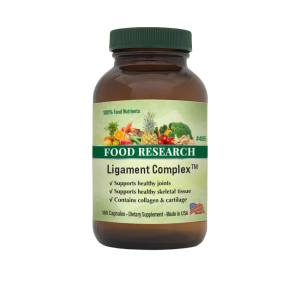
Nutritional Musculoskeletal Support

Nutritional Musculoskeletal Support

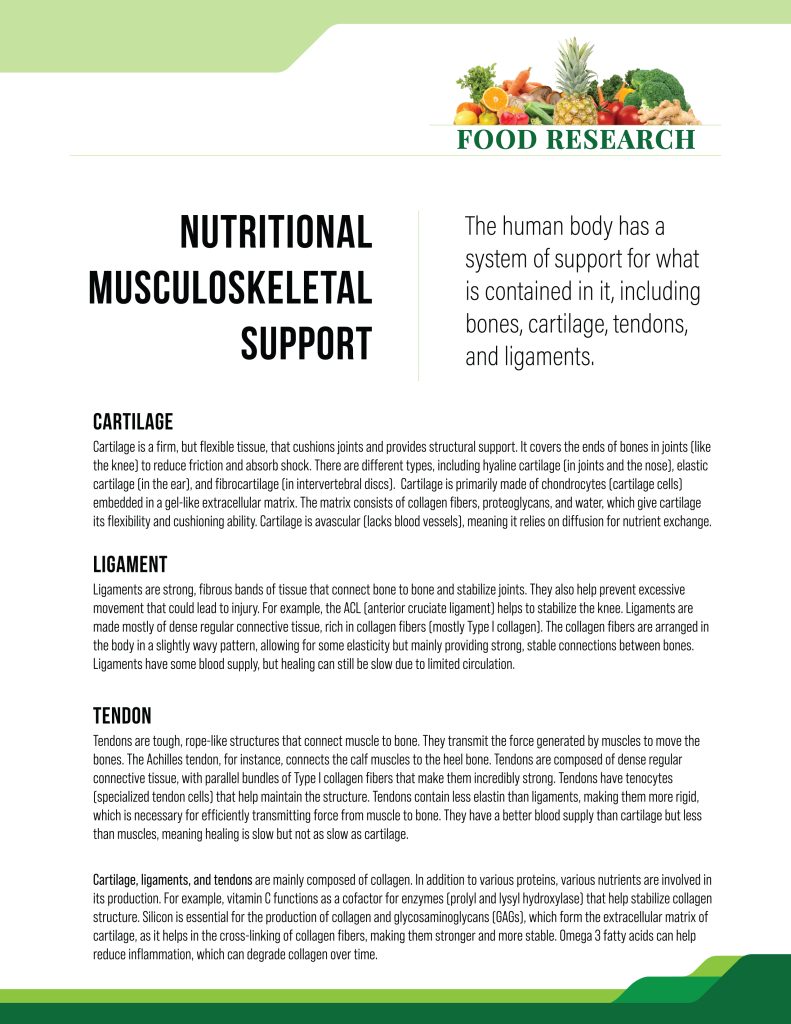
The human body has a system of support for what is contained in it, including bones, cartilage, tendons, and ligaments.

CARTILAGE
Cartilage is a firm, but flexible tissue, that cushions joints and provides structural support. It covers the ends of bones in joints (like the knee) to reduce friction and absorb shock. There are different types, including hyaline cartilage (in joints and the nose), elastic cartilage (in the ear), and fibrocartilage (in intervertebral discs). Cartilage is primarily made of chondrocytes (cartilage cells) embedded in a gel-like extracellular matrix. The matrix consists of collagen fibers, proteoglycans, and water, which give cartilage its flexibility and cushioning ability. Cartilage is avascular (lacks blood vessels), meaning it relies on diffusion for nutrient exchange.

LIGAMENTS
Ligaments are strong, fibrous bands of tissue that connect bone to bone and stabilize joints. They also help prevent excessive movement that could lead to injury. For example, the ACL (anterior cruciate ligament) helps to stabilize the knee. Ligaments are made mostly of dense regular connective tissue, rich in collagen fibers (mostly Type I collagen). The collagen fibers are arranged in the body in a slightly wavy pattern, allowing for some elasticity but mainly providing strong, stable connections between bones. Ligaments have some blood supply, but healing can still be slow due to limited circulation.

TENDONS
Tendons are tough, rope-like structures that connect muscle to bone. They transmit the force generated by muscles to move the bones. The Achilles tendon, for instance, connects the calf muscles to the heel bone. Tendons are composed of dense regular connective tissue, with parallel bundles of Type I collagen fibers that make them incredibly strong. Tendons have tenocytes (specialized tendon cells) that help maintain the structure. Tendons contain less elastin than ligaments, making them more rigid, which is necessary for efficiently transmitting force from muscle to bone. They have a better blood supply than cartilage but less than muscles, meaning healing is slow but not as slow as cartilage.


Cartilage, ligaments, and tendons are mainly composed of collagen. In addition to various proteins, various nutrients are involved in its production. For example, vitamin C functions as a cofactor for enzymes (prolyl and lysyl hydroxylase) that help stabilize collagen structure. Silicon is essential for the production of collagen and glycosaminoglycans (GAGs), which form the extracellular matrix of cartilage, as it helps in the cross-linking of collagen fibers, making them stronger and more stable. Omega 3 fatty acids can help reduce inflammation, which can degrade collagen over time.

Below are 100% FOOD Supplements intended for Nutritional Musculoskeletal Support

To Apply for Wholesale Account

or Call Us at (805) 489-7185
or Email Us at doctorsfoodresearch@gmail.com for more info.

The Truth About Vitamins in Nutritional Supplements

For decades the ‘natural’ health industry has been touting thousands of vitamin supplements. The truth is that most vitamins in supplements are made or processed with petroleum derivatives or hydrogenated sugars. Even though they are often called natural, most non-food vitamins are isolated substances which are crystalline in structure.

Read More »

BEST SELLERS!

More Products

VEGETARIAN

GLANDULARS

VITAMINS & MINERALS

Simply Female Article

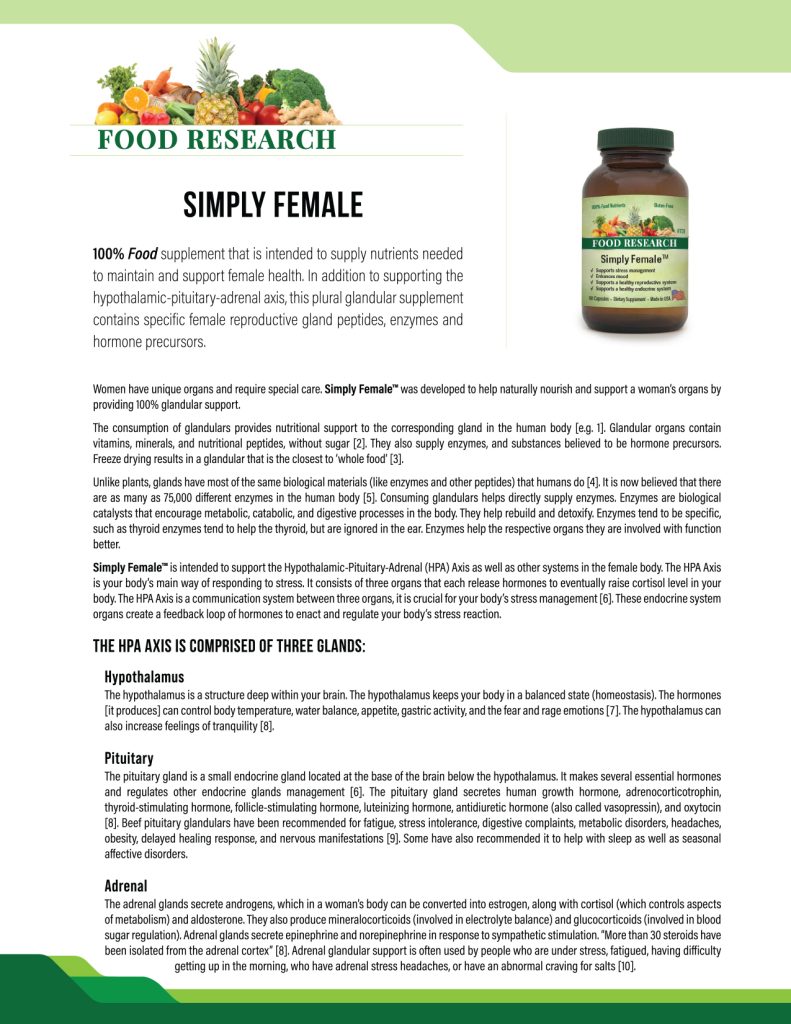
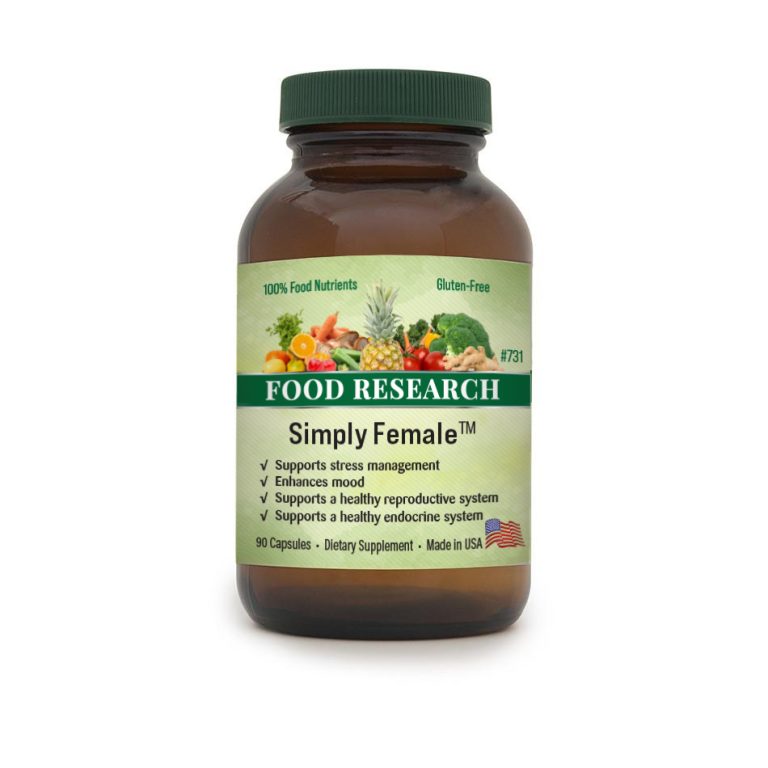
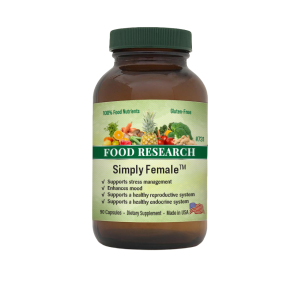
Simply Female™

100% Food supplement that is intended to supply nutrients needed to maintain and support female health. In addition to supporting the hypothalamic-pituitary-adrenal axis, this plural glandular supplement contains specific female reproductive gland peptides, enzymes and hormone precursors.

Women have unique organs and require special care. Simply FemaleTM was developed to help naturally nourish and support a woman’s organs by providing 100% glandular support. 

The consumption of glandulars provides nutritional support to the corresponding gland in the human body [e.g. 1]. Glandular organs contain vitamins, minerals, and nutritional peptides, without sugar [2]. They also supply enzymes, and substances believed to be hormone precursors. Freeze drying results in a glandular that is the closest to ‘whole food’ [3].

Unlike plants, glands have most of the same biological materials (like enzymes and other peptides) that humans do [4]. It is now believed that there are as many as 75,000 different enzymes in the human body [5]. Consuming glandulars helps directly supply enzymes. Enzymes are biological catalysts that encourage metabolic, catabolic, and digestive processes in the body. They help rebuild and detoxify. Enzymes tend to be specific, such as thyroid enzymes tend to help the thyroid, but are ignored in the ear. Enzymes help the respective organs they are involved with function better.

Simply FemaleTM is intended to support the Hypothalamic-Pituitary-Adrenal (HPA) Axis as well as other systems in the female body. The HPA Axis is your body’s main way of responding to stress. It consists of three organs that each release hormones to eventually raise cortisol level in your body. The HPA Axis is a communication system between three organs, it is crucial for your body’s stress management [6]. These endocrine system organs create a feedback loop of hormones to enact and regulate your body’s stress reaction.

The HPA Axis is comprised of three glands:

  Hypothalamus: The hypothalamus is a structure deep within your brain. The hypothalamus keeps your body in a balanced state (homeostasis). The hormones [it produces] can control body temperature, water balance, appetite, gastric activity, and the fear and rage emotions [7]. The hypothalamus can also increase feelings of tranquility [8].

  Pituitary: The pituitary gland is a small endocrine gland located at the base of the brain below the hypothalamus. It makes several essential hormones and regulates other endocrine glands management [6]. The pituitary gland secretes human growth hormone, adrenocorticotrophin, thyroid-stimulating hormone, follicle-stimulating hormone, luteinizing hormone, antidiuretic hormone (also called vasopressin), and oxytocin [8]. Beef pituitary glandulars have been recommended for fatigue, stress intolerance, digestive complaints, metabolic disorders, headaches, obesity, delayed healing response, and nervous manifestations [9]. Some have also recommended it to help with sleep as well as seasonal affective disorders.

  Adrenal: The adrenal glands secrete androgens, which in a woman’s body can be converted into estrogen, along with cortisol (which controls aspects of metabolism) and aldosterone. They also produce mineralocorticoids (involved in electrolyte balance) and glucocorticoids (involved in blood sugar regulation). Adrenal glands secrete epinephrine and norepinephrine in response to sympathetic stimulation. “More than 30 steroids have been isolated from the adrenal cortex” [8]. Adrenal glandular support is often used by people who are under stress, fatigued, having difficulty getting up in the morning, who have adrenal stress headaches, or have an abnormal craving for salts [10].

In addition to supporting the HPA Axis, women may benefit from additional bovine glandular support of the reproductive organs. 

Simply FemaleTM contains glandular support for the ovaries, fallopian tubes, uterus and cervix. 

  Ovary: While ovaries are involved in reproduction and hormone production, bovine ovarian tissue has been advised to help women sleep at night, reduce the production of acne, improve mood, sometimes aid in menopausal issues and for some women, increase fertility [11].

  Fallopian tubes: are a pair of hollow, muscular ducts located between the ovaries and uterus. Each Fallopian tube is a channel between the ovaries which are involved with reproduction and menstruation [8]. Estrogen causes the ciliated epithelial cells that line the fallopian tubes to increase [8].

  Bovine uterus extracts have long been used for women with leucorrhea, uterine cysts, fibroids, uterine displacement, excessive or scanty mense, some types of sterility, menstruation cramps, prolapse uterus [7, 12]. Some practitioners have found uterine glandulars to be helpful for female moods.

  The cervix is the lower, narrow canal part of the uterus, connecting it to the vagina. It plays a vital role in menstruation, fertility, pregnancy, and childbirth [13]. The cervix allows fluids to leave and enter the uterus.

Simply FemaleTM also contains bovine thyroid tissue (note: bovine thyroid glands are thyroxine-free, thus do not result in a shutting down of the thyroid gland when taken). Thyroid tissue is used by people with symptoms associated with low thyroid such as afternoon tiredness, poor circulation, poor temperature tolerance, headaches, low metabolism, diminished female libido, weight concerns, and sometimes dry skin [14]. After a short adjustment period many people will find that they crave less junk food, caffeine, and similar items less but instead carve more water, fruits, and even vegetables.

Bovine animal glands have been consumed since the beginning of history [15], and glandulars have been part of the human diet for thousands of years. They were used for medicinal purposes in the USA in the 1800s [16] and were mentioned in Merck’s 1905 Manual of Materia Medica [17]. Their long-term use in nutritional supplements began over a century ago [18].

Various studies and reports involving glandulars have been published [e.g. 19-26]. Interestingly, a study of Australian aborigines found that those that had obesity and diabetes who left Western diets and returned to a native diet that included consuming animal glands found that those diseases reversed [26]. Glandulars are “generally recognized as safe” [27]

New Zealand, Australian, and Argentinean farmers tend to raise their cattle more naturally than those raised in places that use a lot of genetically-modified grains like the USA. Cows in New Zealand, Australia, and Argentina are almost exclusively raised on unfertilized natural grasses which are found in the pastures of those lands. Neither New Zealand nor Australia, nor Argentina has ever had a case of BSE (bovine spongiform encephalopathy) nor scrapie, a similar disease found in sheep [28-30]. Simply FemaleTM only provides glands from those southern hemisphere nations.

In summary, Simply FemaleTM supports the HPA Axis, the reproductive organs and the thyroid gland. Simply Female offers complete glandular support for the neuroendocrine system, the endocrine system and the reproductive system.  

Women seeking relief from hormonal imbalances, as well as those ending hormone replacement therapy, can nourish and help stabilize their endocrine systems with glandular support, such as in Simply FemaleTM [31].
Some of these studies (or citations) may not conform to peer review standards, therefore, the results are not conclusive. Professionals can, and often do, come to different conclusions when reviewing scientific data. None of these statements have been reviewed by the FDA. All products distributed by Doctors’ Research, Inc. are nutritional and are not intended for the treatment or prevention of any medical conditions.

Simply FemaleTM is intended to support the Hypothalamic-Pituitary-Adrenal (HPA) Axis as well as other systems in the female body. The HPA Axis is your body’s main way of responding to stress. It consists of three organs that each release hormones to eventually raise cortisol level in your body.

The HPA Axis is a communication system between three organs, it is crucial for your body’s stress management [6]. These endocrine system organs create a feedback loop of hormones to enact and regulate your body’s stress reaction.

References

[1] Burns D. Accumulating scientific evidence supports glandular therapy.  The Digest of Chiropractic Economics, Nov/Dec 1987: 74-79
[2] Basic Report: 13318, Beef, variety meats and by-products, brain, raw. National Nutrient Database for Standard Reference Legacy Release, April, 2019; Basic Report: 13325, Beef, variety meats and by-products, liver, raw. National Nutrient Database for Standard Reference Legacy Release, April, 2018
[3] The Difference Between Freeze-Dried, Dehydrated and Raw Foods. Trail Blazers Pets, December 13, 2017
[4] Hulsey MG, Martin, RJ.  The role of animals in nutritional research.  Nutr Today,1993;28 (5):1993
[5] The Handy Answer Book Series, 2nd edition. Visible Ink Press, 2014
[6] Hypothalamic-Pituitary-Adrenal (HPA) Axis, Cleveland Clinic, https://my.clevelandclinic.org/health/body/hypothalamic-pituitary-adrenal-hpa-axis, accessed 08/05/2025
[7] Profiles in Nutritional Progress.  Rubicon Productions, Bakersfield, 1993
[8] Guyton AC, Hall JE.  Textbook of Medical Physiology, 9th ed. WB Saunders, 1996
[9] Lee R. Pituitary Cytotrophin. Product Bulletins, circa 1950
[10] Lee R. Adrenamin.  In Product Bulletins, circa 1950
[11] Lee R. Ovary Cytotrophin.  In Product Bulletins, circa 1950
[12] Lee R. Uterus Cytotrophin.  In Product Bulletins, circa 1950
[13] Prendiville W, Sankaranarayanan R. Anatomy of the uterine cervix and the transformation zone. Colposcopy and Treatment of Cervical Precancer, International Agency for Research on Cancer, 2017
[14] Neumann C. Serious Nutrition: Incorporating Clinically Effective Nutrition Into Your Practice.  Source Graphics, Kelowna (B.C.), 2005
[15] Dunbar R.  Foraging for nature’s balanced diet.  New Scientist August 31, 1991:25-28
[16] Isaacs LL. A Brief History of Glandular Therapy: More Than Just Thyroid. Integr Med (Encinitas). 2023 May;22(2):26-31
[17] Merck’s 1905 Manual of the Materia Medica: A Ready-reference Pocket Book for the Physician and Surgeon Containing Names of the Chemicals and Drugs, 3rd ed. Merck & Co, 1905, p. 114
[18] Harrower H.  Practical Organotherapy.  3rd ed.  W.B.  Conkey Co.: Hammond (Indiana): 31-36, 1921
[19] Shamberger RC, Hendron WH, Leictner AM.  Long-term nutritional and metabolic consequences of pancreaticoduodenectomy in children.  Surgery, 1994;115(3): 382-388
[20] Thiel R., Fowkes S.W.  Down syndrome and thyroid dysfunction: Should nutritional support be the first-line treatment? Medical Hypotheses, 2007; 69:809-815
[21] Thiel R. Might disorders of calcium cause or contribute to myoclonic seizures?  Medical Hypotheses, 2006; 66(5):969-974
[22] Thiel R. Thiel R. CHARGE (Hall-Hittner) Syndrome and Nutrition: A novel case report, 2006
[23] Thiel R.  Might disorders of calcium cause or contribute to myoclonic seizures?  Med Hypo. 2006; 66(5):969-974
[24] DeCava JA.  Glandular supplements.  Nutrition News and Views 1997; 1(3):1-10
[25] Thiel R. Efficacy of Glandulars and Herbs: The Result of 945 Cases. The Original Internist, Volume 19 (1), March 2012, 7-11
[26] O’Dea K. Traditional diet and food preferences of Australian aboriginal hunter-gatherers. Philos Trans R Soc Lond B Biol Sci. 1991 Nov 29;334(1270):233-240; discussion 240-241
[27] Generally Recognized as Safe (GRAS). USFDA, https://www.fda.gov/food/food-ingredients-packaging/generally-recognized-safe-gras accessed 02/07/20
[28] JOINT STATEMENT FROM THE NEW ZEALAND FOOD SAFETY AUTHORITY AND MINISTRY OF AGRICULTURE AND FORESTRY. BSE in the US has no food safety impact in New Zealand or threat to our animal health status. 24 December 2003
[29] New Zealand’s Scrapie Freedom.  New Zealand Food Safety Authority.  Nzfsa.gov 2/16/06
[30] Scudel A.A, et al.  Analysis of risk factos and active surveillance for BSE in Argentina.  Siiap.sagyp.mecon.ar 02/16/06
[31] Clinical Reference Guide, Revised April 2018

All products distributed by Doctors’ Research, Inc. are nutritional and are not intended for the treatment or prevention of any medical conditions.

To Apply for Wholesale Account

or Call Us at (805) 489-7185
or Email Us at doctorsfoodresearch@gmail.com for more info.

BEST SELLERS!

More Products

VEGETARIAN

GLANDULARS

VITAMINS & MINERALS

Vitamin B-6, B-12 & Folate™ Article

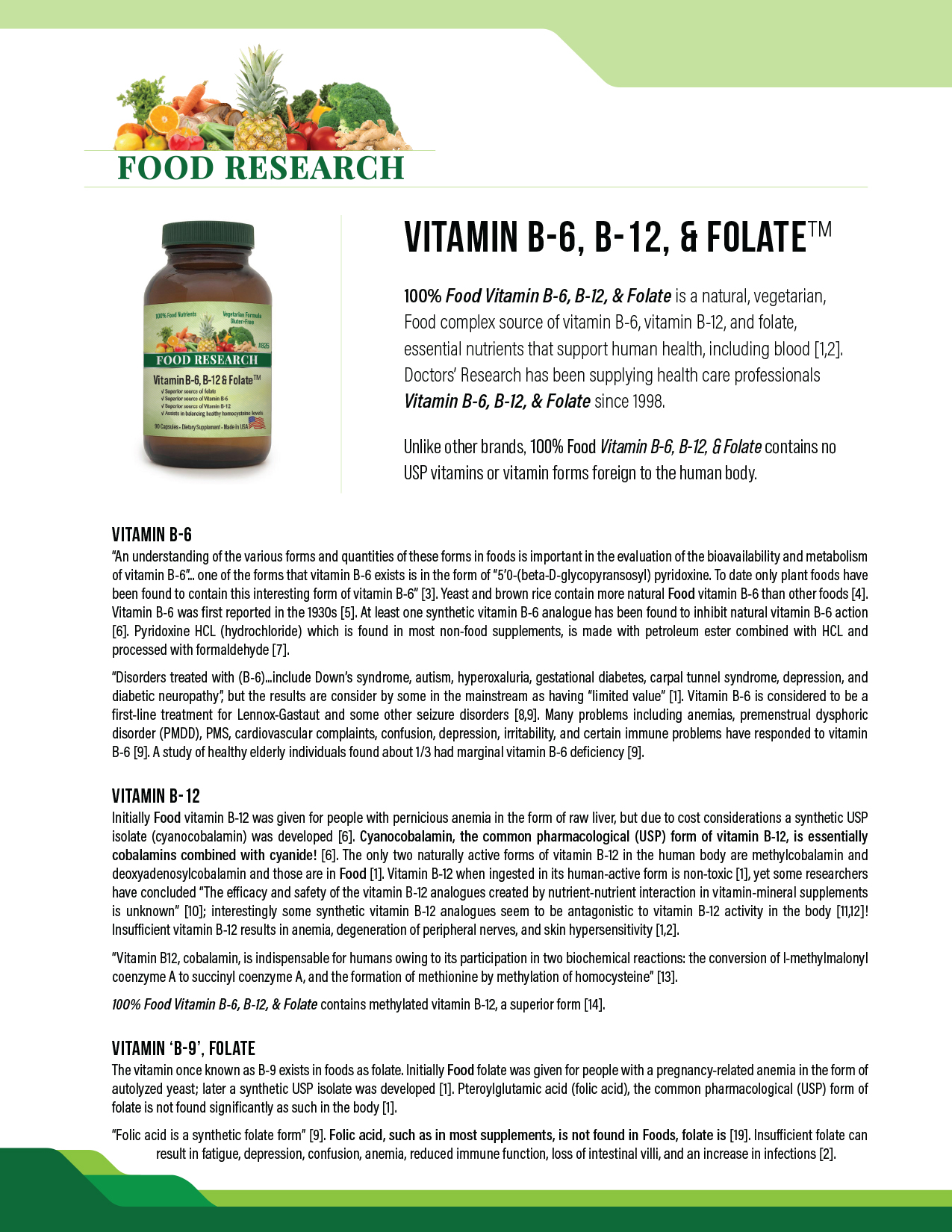
Vitamin B-6, B-12, & Folate™

100% Food Vitamin B-6, B-12, & Folate is a natural, vegetarian, Food complex source of vitamin B-6, vitamin B-12, and folate, essential nutrients that support human health, including blood [1,2]. Doctors’ Research has been supplying health care professionals Vitamin B-6, B-12, & Folate since 1998.

Unlike other brands, 100% Food Vitamin B-6, B-12, & Folate contains no USP vitamins or vitamin forms foreign to the human body.

Vitamin B-6:
“An understanding of the various forms and quantities of these forms in foods is important in the evaluation of the bioavailability and metabolism of vitamin B-6”… one of the forms that vitamin B-6 exists is in the form of “5’0-(beta-D-glycopyransosyl) pyridoxine. To date only plant foods have been found to contain this interesting form of vitamin B-6” [3]. Yeast and brown rice contain more natural Food vitamin B-6 than other Foods [4]. Vitamin B-6 was first reported in the 1930s [5]. At least one synthetic vitamin B-6 analogue has been found to inhibit natural vitamin B-6 action [6]. Pyridoxine HCL (hydrochloride) which is found in most non-Food supplements, is made with petroleum ester combined with HCL and processed with formaldehyde [7].

“Disorders treated with (B-6)…include Down’s syndrome, autism, hyperoxaluria, gestational diabetes, carpal tunnel syndrome, depression, and diabetic neuropathy”, but the results are consider by some in the mainstream as having “limited value” [1]. Vitamin B-6 is considered to be a first-line treatment for Lennox-Gastaut and some other seizure disorders [8,9]. Many problems including anemias, premenstrual dysphoric disorder (PMDD), PMS, cardiovascular complaints, confusion, depression, irritability, and certain immune problems have responded to vitamin B-6 [9]. A study of healthy elderly individuals found about 1/3 had marginal vitamin B-6 deficiency [9].

Vitamin B-12:
Initially Food vitamin B-12 was given for people with pernicious anemia in the form of raw liver, but due to cost considerations a synthetic USP isolate (cyanocobalamin) was developed [6]. Cyanocobalamin, the common pharmacological (USP) form of vitamin B-12, is essentially cobalamins combined with cyanide! [6]. The only two naturally active forms of vitamin B-12 in the human body are methylcobalamin and deoxyadenosylcobalamin and those are in Food [1]. Vitamin B-12 when ingested in its human-active form is non-toxic [1], yet some researchers have concluded “The efficacy and safety of the vitamin B-12 analogues created by nutrient-nutrient interaction in vitamin-mineral supplements is unknown” [10]; interestingly some synthetic vitamin B-12 analogues seem to be antagonistic to vitamin B-12 activity in the body [11,12]! Insufficient vitamin B-12 results in anemia, degeneration of peripheral nerves, and skin hypersensitivity [1,2].

“Vitamin B12, cobalamin, is indispensable for humans owing to its participation in two biochemical reactions: the conversion of l-methylmalonyl coenzyme A to succinyl coenzyme A, and the formation of methionine by methylation of homocysteine” [13].

100% Food Vitamin B-6, B-12, & Folate contains methylated vitamin B-12, a superior form [14].

Vitamin ‘B-9’, Folate
The vitamin once known as B-9 exists in foods as folate. Initially Food folate was given for people with a pregnancy-related anemia in the form of autolyzed yeast; later a synthetic USP isolate was developed [1]. Pteroylglutamic acid (folic acid), the common pharmacological (USP) form of folate is not found significantly as such in the body [1].

“Folic acid is a synthetic folate form” [9]. Folic acid, such as in most supplements, is not found in Foods, folate is [19]. Insufficient folate can result in fatigue, depression, confusion, anemia, reduced immune function, loss of intestinal villi, and an increase in infections [2]. Folate deficiency is the most important determinant in high homocysteine levels [11], and supplemental folate is effective in reducing homocysteine [15,16]. “The highest concentrations of folate exist in yeast…” [1]. Insufficient folate can result in fatigue, depression, confusion, anemia, reduced immune function, loss of intestinal villi, and an increase in infections [2]. “(C)onsumption of more than 266 mcg of synthetic folic acid (PGA) results in absorption of unreduced PGA, which may interfere with folate metabolism for a period of years” [1].

A 2004 paper from the British Medical Journal confirmed what many natural health professional have known all along: since folic acid is unnatural and the body cannot fully convert large amounts of it into usable folate, this artificial substance can be absorbed and may have unknown negative consequences in the human body [17], folate supplementation obviously should be in Food folate forms and not folic acid!

Many scientists have concerns about folic acid [18]. High consumption of folic acid is dangerous [20].

Vitamins B-6, B-12, and Folate are all important nutrients for healthy blood; the absence of any of them can trigger various forms of anemia (especially pernicious anemia) [1,18]. Subclinical deficiencies in vitamin B-12, vitamin B-6, and folate may impair cognitive function [21].

Homocysteine responds to vitamin B-12 and folate [16]. Dr. Mason of Tufts University School of Medicine reports that a 20% elevation of homocysteine significantly increases the risk of cardiovascular disease [12]. Normal homocysteine level is about 12 umol/L, while cardiovascular risk increases about 14-16 umol/L [22]. In addition, even if blood tests for vitamin B-12 or folate appear to be normal, this may be because results are masked by an elevated level of homocysteine. Homocysteine is highly implicated in vascular diseases (such as cardiovascular and other vascular disorders), and can be reduced with sufficient vitamin B-12 and Folate; with vitamin B-6 sometimes playing a supporting role [16].

Superoxide Dismutase:
“Superoxide dismutase (S.O.D.) is one of the most important enzymes that function as cellular antioxidants…The absence of this enzyme is lethal” [1]. “It protects intracellular components from oxidative damage, converting the superoxide ion to hydrogen peroxide” [1]. S.O.D. is a powerful free radical scavenger which has been clinically shown to protect the brain, heart, liver, lungs, kidneys, skin, muscles, penis, nerves, and spinal cord from ischemic injury [23]. High levels of S.O.D. have been associated with reduced growth of Candida albicans [24]. 100% Food Vitamin B-6, B-12, and Folate naturally contains S.O.D.

Organic Brown Rice also a Food complex source of silicon and B vitamins [2,25-28].

Since Vitamin B-6, B-12& Folate contains only Foods, unlike other isolated supplements, it also naturally includes vitamin B-1 (thiamin), vitamin B-2 (riboflavin)vitamin B-3 (niacinamide), vitamin B-5 (pantothenate), choline, inositol, and other B vitamin factors which often work with vitamins B-6B-12, and folate in the body. All these factors make 100% Food Vitamin B-6, B-12& Folate the choice for doctors interested in truly natural health.

Many females simply take Vitamin B-6, B-12& Folate as a Food supplement to help them feel better.

Some of these studies (or citations) may not conform to peer review standards, therefore, the results are not conclusive. Professionals can, and often do, come to different conclusions when reviewing scientific data. None of these statements have been reviewed by the FDA. All products distributed by Doctors’ Research, Inc. are nutritional and are not intended for the treatment or prevention of any medical conditions.

Vitamin B-6, B-12 & Folate™

Unlike other so-called “whole food” formulas, Vitamin B-6, B-12 & Folate™does not contain USP folic acid as that form is not what is found in natural foods.  Vitamins B6, B12, and B9 support healthy blood. B12 is essential for myelin synthesis and central nervous system function.

Unlike most so-called “natural” supplements, Vitamin B-6, B-12 & Folate™ does not contain any folic acid, which is a sythetic from of vitamin B-9 and is dangerous (for more details, please check out the article on Folic Acid Dangers)

References

[1] Shils ME, Olson JA, Shike M. Modern Nutrition in Health and Disease, 9th ed. Williams & Wilkins, Balt., 1999
[2] Whitney EN, Hamilton EMN. Understanding Nutrition, 4th ed. West Publishing, NY, 1987
[3] Leklem JE. Vitamin B6. In Modern Nutrition in Health and Disease, 8th ed. Lea & Febiger, Phil.,1994:383-394
[4] Ensminger AH, Ensminger ME, Konlade JE, Robson JRK. Food & Nutrition Encyclopedia, 2nd ed. CRC Press, New York, 1993
[5] Shils ME, et al. Modern Nutrition in Health and Disease, 10th ed. Lipponcott Williams & Wilkins, Balt., 2006
[6] Mervyn L. The B Vitamins. Thorsons, Wellingborough (UK), 1981
[7] Vitamin-Mineral Manufacturing Guide Nutrient Empowerment, volume 1. Nutrition Resource, Lakeport (CA), 1986
[8] Glauser TA, Morita DA. Encephalopathic epilepsy after infancy. In Pediatric Epilepsy, 2nd ed. Demos, New York, 2001:201-218
[9] Hendler SS, Rorvik D, eds. PDR for Nutritional Supplements. Medical Economics, Montvale (NJ), 2001
[10] Shils ME, Olson JA, Shike M. Modern Nutrition in Health and Disease, 8th ed. Lea & Febiger, Phil., 1994
[11] Ishida A, Kanefusa H, Fujita H, Toraya T. Microbiological activities in nucleotide loop-modified analogues of vitamin B12. Arch Microbiol 1994;161(4):293-299
[12] Tandler B, Krhenbul S, Brass EP. Unusual mitochondria in the hepatocytes of rats treated with a vitamin B12 analogue. Anat Rec 1994;231(1):1-6
[13] Moracova M, et al. Biological properties of vitamin B12. Nutr Res Rev. 2025 Jun;38(1):338-370
[14] Mather Y, Hazra AB. Methylations in vitamin B12 biosynthesis and catalysis. Curr Opin Struct Biol. 2022 Dec:77:102490
[15] Verhoef P. Homocysteine metabolism and risk of myocardial infarction: Relation with vitamin B6, B12, and Folate. Am J Epidemiol 1996;143(9):845-859
[16] Brattstrom L. Vitamins as homocysteine-lowering agents: A mini review. Presentation at The Experimental Biology 1995 AIN Colloquium, April 13, 1995, Atlanta Georgia
[17] Lucock M. Is folic acid the ultimate functional food component for disease prevention? BMJ, 2004;328:211-214
[18] Menezo Y. Folic Acid, Folinic Acid, 5 Methyl TetraHydroFolate Supplementation for Mutations That Affect Epigenesis through the Folate and One-Carbon Cycles. Biomolecules. 2022 Jan 24;12(2):197
[19] Macrae R, Robson RK, Sadler MJ. Encyclopedia of Food Science and Nutrition. Academic Press, NY, 1993
[20] Thiel R.  Folic Acid is Hazardous to Your Health.  What About Food Folate?  The Original Internist, 17(2) June 2010, 88-90; Thiel R. Is Folic Acid is Hazardous to Your Health? What About Food Folate? Monitor of Naturopathy, Spring 2025
[21] Gonzalez-Gross M, Marcos A, Pietrzik K. Nutrition and cognitive impairment in the elderly. Br J Nutr 2001;86:313-321
[22] Brown S, et al. High serum homocysteine appear to be a risk factor. Family Practice News May 1, 1995:25
[23] Null G. Superoxide Dismutase. In The Clinician’s Handbook of Natural Healing. Kensington Books, New York, 1997:137-144
[24] Romandini P, Bonotto C, Bertoloni G, Beltramini M, Salvato B. Superoxide dismutase, catalase and cell dimorphism in Candida albicans cells exposed to methanol and different temperature. Comp Biochem Physiol Pharm Toxicol Endocrinol,1994;108(1):53-57 [25] Thompson FE, et al. Sources of fiber and fat in the diets of U.S. women ages 19 to 50: implications for nutritional education and policy. Am J Pub Health 1992, 82(5):695-702
[26] Dietary fiber: importance of function as well as amount. Lancet 1992, 340:1133-1134
[27] Jensen B. The Chemistry of Man. Bernard Jensen, Escondido, 1983
[28] Nielsen FH. Ultratrace minerals. In Modern Nutrition in Health and Disease, 9th ed. Williams and Wilkins, Balt.;1999:283-303

All products distributed by Doctors’ Research, Inc. are nutritional and are not intended for the treatment or prevention of any medical conditions.

To Apply for Wholesale Account

or Call Us at (805) 489-7185
or Email Us at doctorsfoodresearch@gmail.com for more info.

BEST SELLERS!

More Products

VEGETARIAN

GLANDULARS

VITAMINS & MINERALS

Dynamic Chiropractic AD

Most of your patients are consuming synthetic vitamins and industrially-processed rocks for nutrients, shouldn’t they get 100% food nutrients from you?

Yes, it is true!
98.97%
of supplements consumed in the USA include synthetic vitamins and/or inorganic mineral salts.

Nutrients in foods, however, are superior to those and are better for supporting optimal health.

DOCTORS’ RESEARCH, Inc. has been distributing 100% food nutrient supplements to health care professionals since 1998.

Are you looking for a supplement supplier that:

  • Provides 100% food nutrient supplements
  • Has vegan and glandular products intended for health care professionals
  • Only supplies glandulars from New Zealand, Australia, and Argentina
  • Supplies vegan capsules for non-tableted, non-oil products
  • NEVER SELLS SUPPLEMENTS ON AMAZON
  • Never has any pork or shellfish in distributed products
  • Supplies products from a Kosher/Halal certified facility

If so, you should contact DOCTORS’ RESEARCH, Inc.
We can also supply you a FREE catalog with a ‘Chiro-Nutrition Chart.’

DOCTORS’ RESEARCH, Inc. would like to announce that we have a team of independent men and women, across the USA, who can assist you with nutritional education.

Adam Davis of Midwest Functional Medicine:
PH: 585-683-3048
Email: adamjdavis13@yahoo.com
Kansas, Missouri, Oklahoma, and Nebraska

Audrey Taylor of Clinical Nutrition Services:
PH: 615-830-8732
Email: audrey@clinicalnutritionservices.net
Alabama, Kentucky, and Mississippi

Ben Viola of Integrative Solutions of America:
PH: 617-469-1197 
Email: ben@integrativesolutionsoa.com
Massachusetts, Rhode Island

Bethany Lafferty of Vitae Wellness Solutions:
PH: 425-405-5783
Email: vitaewellnesssolutions@gmail.com
Alaska, Idaho, Oregon, Washington, and British Columbia

Chris (DC) & Melissa (ACN) Taylor of Whole Food Practice:
PH: 801-432-8869
Email: support@wholefoodpractice.com
Colorado, Idaho, Montana, Utah, and Wyoming

Chris Lippe of Functional Health and Longevity:
PH: 951-640-8092
Email: csl4health@gmail.com
Arizona and Southern California

Chris Burdick of Complete Wellness:
PH: 231-342-1321
Email: Chris@compwellnessllc.com
Indiana, Illinois, Michigan, and Ohio

Curt Hamilton of Hamilton Colt:
PH: 214-995-9917
Email: curt.fmc@gmail.com
Arkansas, Tennessee, and Northern Texas

Dory Lewis of Vital Health Resources:
PH: 864-735-8545
Email: dorylewis@me.com
North Carolina and South Carolina

Frank Wolfe of USAonlinehealth:
PH: 610-806-3249
Email: fwolfe@usaonlinehealth.com
New Jersey and West Virginia

Jeffrey Smith (DC) of Comprehensive Integrative Wellness:
PH: 585-233-7331
Email: jeffreysmithdc@gmail.com
New York (except metro-NYC) and Pennsylvania

Jerry Morrison of Functional Medicine Consultants of Texas:
PH: 832-928-8888
Email: holisticwellness@mac.com
Louisiana and Southern & Central Texas

Jim Hassett of Solely Practitioner:
PH: 805-660-7443
Email: jimhassett@gmail.com Southern California and Las Vegas

Justin Toal of Aduco:
PH: 800-662-9134
Email: justin@aduco.com
Northern California and various other locations

Kristina Ginn of Midwest Practice Solutions:
PH: 314-518-9002
Email: kristina@mwps.life
Minnesota, Missouri and Iowa

Lewis Ruffner of New England Nutritional Services:
PH: 603-686-1343 
Email: nenutrition@comcast.net
Maine, New Hampshire, and Vermont

Lisa Moore of Holistic Practitioner Network:
PH: 646-468-9821
Email: lisa@holisticpractitionernetwork.com
Metropolitan New York City region and Connecticut

Liz Crowley of Wellness Journey:
PH: 561-654-4036
Email: wellnessjourney4you@gmail.com Florida

Rich Laurino (DC) of Laurino Wellness:
PH: 443-243-3888
Email: laurinowellness@gmail.com
Delaware, District of Columbia, and Maryland

AD – Adam Davis

ADAM DAVIS
of Midwest Functional Medicine:
Phone: 585-683-3048
Email: adamjdavis13@yahoo.com
KS  •  MO •  ND •  NE •  OK •  SD

AD

AUDREY TAYLOR
of Clinical Nutrition Services:
Phone:  615-830-8732
Email: audrey@clinicalnutritionservices.net
AL  •  GA  •  KY  •  MS

BEN VIOLA
of Integrative Solutions of America:
Phone:  617-469-1197 
Email: ben@integrativesolutionsoa.com
MA  •  RI

BETHANY LAFFERTY
of Vitae Wellness Solutions:
Phone:  425-405-5783
Email: vitaewellnesssolutions@gmail.com
AK  •  HI  •  OR  •  WA  •  BC

CHRIS & MELISSA TAYLOR
of Whole Food Practice:
Phone:  801-432-8869
Email: support@wholefoodpractice.com
CO  •  ID  •  MT  •  UT  •  WY

CHRIS BURDICK
of Complete Wellness:
Phone:  231-342-1321
Email: Chris@compwellnessllc.com
IL  •  IN  •  MI  •  OH

RICH LAURINO of Laurino Wellness:
Phone:  443-243-3888
Email: laurinowellness@gmail.com
DC  •  DE  •  MD  •  VA

AD

CHRIS LIPPE
of Functional Health and Longevity:
Phone:  951-640-8092
Email: csl4health@gmail.com
AZ  •  Southern CA

AD

CURT HAMILTON
of Hamilton Colt:
Phone:  214-995-9917
Email: curt.fmc@gmail.com
AR  •  TN  •  Northern TX

FRANK WOLFE
of USAonlinehealth:
Phone:  610-806-3249
Email: fwolfe@usaonlinehealth.com
NJ  •  WV

DORY LEWIS
of Vital Health Resources:
Phone:  864-735-8545
Email: dorylewis@me.com
NC • SC

JEFFREY SMITH
of Comprehensive Integrative Wellness:
Phone:  585-233-7331
Email: jeffreysmithdc@gmail.com
PA  •  Upstate NY

JERRY MORRISON
of Functional Medicine Consultants of Texas:
Phone:  832-928-8888
Email: holisticwellness@mac.com
Central & Southern TX  •  LA

AD

JIM HASSETT
of Solely Practitioner:
Phone:  805-660-7443
Email: jimhassett@gmail.com
Southern CA  •  Las Vegas, NV

AD

JUSTIN TOAL
of Aduco:
Phone:  800-662-9134
Email: justin@aduco.com
Northern CA  •  NV

KRISTINA GINN
of Midwest Practice Solutions:
Phone:  314-518-9002
Email: kristina@mwps.life
IA  •  MN  •  MO  •  WI

LEWIS RUFFNER
of New England Nutritional Services:
Phone:  603-686-1343
Email: nenutrition@comcast.net
ME  •  NH  •  VT

LISA MOORE
of Holistic Practitioner Network:
Phone:  646-468-9821
Email: lisa@holisticpractitionernetwork.com
CT  •  Metro NY

LIZ CROWLE
 of Wellness Journey:
Phone:  561-654-4036
Email: wellnessjourney4you@gmail.com
FL

ADAM DAVIS of Midwest Functional Medicine:
PH: 585-683-3048
Email: adamjdavis13@yahoo.com
KS  •  MO •  ND •  NE •  OK •  SD

AUDREY TAYLOR of Clinical Nutrition Services:
PH: 615-830-8732
Email: audrey@clinicalnutritionservices.net
AL  •  GA  •  KY  •  MS

BEN VIOLA of Integrative Solutions of America:
PH: 617-469-1197 
Email: ben@integrativesolutionsoa.com
MA  •  RI

BETHANY LAFFERTY of Vitae Wellness Solutions:
PH: 425-405-5783
Email: vitaewellnesssolutions@gmail.com
AK  •  HI  •  OR  •  WA  •  BRITISH COLUMBIA

CHRIS & MELISSA TAYLOR of Whole Food Practice:
PH: 801-432-8869
Email: support@wholefoodpractice.com
CO  •  ID  •  MT  •  UT  •  WY

CHRIS BURDICK of Complete Wellness:
PH: 231-342-1321
Email: Chris@compwellnessllc.com
IL  •  IN  •  MI  •  OH

CHRIS LIPPE of Functional Health and Longevity:
PH: 951-640-8092
Email: csl4health@gmail.com
AZ  •  Southern CA

CURT HAMILTON of Hamilton Colt:
PH: 214-995-9917
Email: curt.fmc@gmail.com
AR  •  TN  •  Northern TX

DORY LEWIS of Vital Health Resources:
PH: 864-735-8545
Email: dorylewis@me.com
NC • SC

FRANK WOLFE of USAonlinehealth:
PH: 610-806-3249
Email: fwolfe@usaonlinehealth.com
NJ  •  WV

JEFFREY SMITH of Comprehensive Integrative Wellness:
PH: 585-233-7331
Email: jeffreysmithdc@gmail.com
PA  •  Upstate NY

JERRY MORRISON of Functional Medicine Consultants of Texas:
PH: 832-928-8888
Email: holisticwellness@mac.com
Central & Southern TX  •  LA

JIM HASSETT of Solely Practitioner:
PH: 805-660-7443
Email: jimhassett@gmail.com
Southern CA  •  Las Vegas, NV

JUSTIN TOAL of Aduco:
PH: 800-662-9134
Email: justin@aduco.com
Northern CA  •  NV

KRISTINA GINN of Midwest Practice Solutions:
PH: 314-518-9002
Email: kristina@mwps.life
IA  •  MN  •  MO  •  WI

LEWIS RUFFNER of New England Nutritional Services:
PH: 603-686-1343
Email: nenutrition@comcast.net
ME  •  NH  •  VT

LISA MOORE of Holistic Practitioner Network:
PH: 646-468-9821
Email: lisa@holisticpractitionernetwork.com
CT  •  Metro NY

LIZ CROWLEY of Wellness Journey:
PH: 561-654-4036
Email: wellnessjourney4you@gmail.com
FL

RICH LAURINO of Laurino Wellness:
PH: 443-243-3888
Email: laurinowellness@gmail.com
DC  •  DE  •  MD  •  VA

Arginase Bladder™– Nutritional Support for Urine Metabolism and Bladder

Arginase Bladder™– Nutritional Support for Urine Metabolism and Bladder

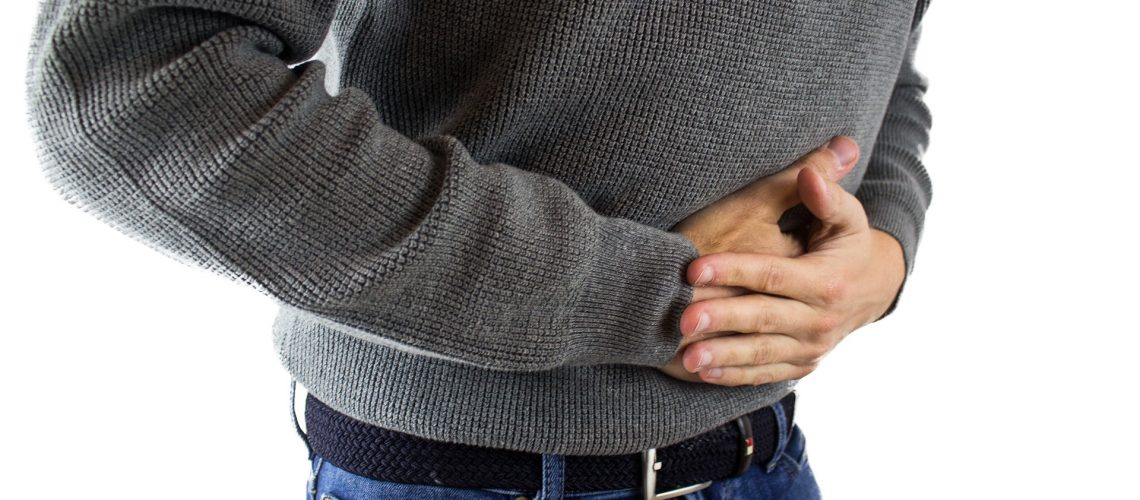
abdominal-pain-2821941_1920
Photo Courtesy of Pixabay.com​

Urination is something many people think little about unless something goes wrong.  From excessive urination to nocturnal enuresis to urinary tract infections to urinary incontinence, urinary issues are problems for many.

Most people do not realize that in order to produce urine, the body processes liquids into an intermediate stage which is high in the amino acid called arginine. Normally the liver produces enough of the enzyme arginase to convert and concentrate this liquid into urea (urine) [1]. When it does not, however, in some people this seems to cause the body to try to expel this high arginine liquid excessively, both day and night.

Decades ago a nutrition-based biological process was developed to assist the body with this aspect of urine metabolism . And now, there is actually one and only one 100% food product that utilizes this special biological process without any USP “nutrients” called Arginase Bladder. Arginase bladder is a 100% Food supplement that is intended to supply nutrients to support healthy kidney and bladder function. The kidneys process proteins and liquids and are the primary organs involved in eliminating metabolic waste products from the blood. Arginase Bladder is intended to support the cleansing ability of the kidneys.  It has been written that this type of product is indicated sometimes when there is “[p]ain in area of kidneys or bladder (may radiate through dorsal region to liver area) burning on urination; uremia, uriniferous odor of breath, itching of skin from “salty” (residue) perspiration; edema; ascites, dropsy, etc.; toxemia, body odor, pasty skin, biliousness; liver disease, enlargement, diminished urination, veinous congestion, etc”.a valuable adjunct in all problems involving the liver and kidneys, particularly where this is evidenced by systemic manifestations involving the detoxification mechanisms and fluid balance” [2].

It is a scientific fact that, “Arginase hydrolyzes arginine to urea”. In addition to raising serum arginine levels, arginase deficiency can lead to raised ammonia levels [3]. Arginase is produced in the liver [1,3].

Arginase Bladder contains ingredients which have been used to nutritionally support the bladder and various aspects of urine metabolism. 

Acerola Cherry is one of the most vitamin C dense foods [4]. Arginase is activated by vitamin C [5]. One study found that vitamin C taken prophylactically by pregnant and nursing mothers could reduce the incidence of urinary tract infections [6]. 

Beet and rice specially processed with Rhizopus oryzae and Tillandsia usneoides has long been used to support, “Intermediate processes involving urea metabolism which support liver and kidney function where toxic overload places stress on these organs” [2]. Many decades ago, Royal Lee, Bill Hansen, and David Roderick worked together. A special type of biological process for urinary support was developed around that time that David”s son Steven Roderick uses for Arginase Bladder. Beets themselves have long been used for kidney and bladder disorders [7].

Bovine kidney supplies kidney tissue. Kidney tissue naturally contains kidney enzymes, proteins, and other peptides needed for proper renal function. “The kidneys perform their most important functions by filtering the plasma and removing substances from the filtrate at a variable rate, depending upon the needs of the body. Ultimately, the kidneys “clear” unwanted substances from the filtrate (and therefore from the blood) by excreting them in the urine while returning substances that are needed back to the blood”Urine formation begins with filtration of large amounts of fluid through the glomerular capillaries into Bowman”s capsule”The kidney conserves water by excreting a concentrated urine” [8]. Helping concentrate urine also reduces the possibility of urinary tract infections, and reduces extra trips to the restroom. Kidney tissue is recommended for urinary tract infections and to strengthen the kidneys [9]. 

Bovine liver supplies liver tissue. Bovine liver tissue contains the substances naturally found in the liver, like arginase [1]. In order to convert the high arginine intermediate substrate into urea and orthinine, the body uses the enzyme arginase. “The liver has the greatest amount of this enzyme, and accounts for the majority of urea synthesis”[a] small amount is carried out by the kidney and brain”the hydrolysis of arginine to urea and orthinine makes possible the urea cycle” [1]. An excess accumulation of arginine (due to insufficient arginase) contributes to excessively frequent urination (as the body tries to flush this diluted semi-urine out) and increases in urinary tract infections (as this less concentrated semi-urine is a less hostile environment for pathogens than concentrated urine is). “The liver is well known for its ability to detoxify or excrete”many drugs”hormones” and other substances” [8]. The liver tissue found in Uro-Kid Supportis from New Zealand.

Buckwheat juice and seed has long been used as part of nutrition to support the intermediate processes involving urea metabolism and “support liver and kidney function where toxic overload places stress on these organs” [2]. “A 20% drop in systolic level is not unusual in the initial stages, progressively lowering under long term use. Importance of protracted treatment should be stressed” [10]. Though most often recommended for capillary and venous health (i.e. bruising, varicose veins) [10,11], naturopaths, chiropractors, and holistic doctors have long recommended its leaves or its immune supporting components in products to fight viral and bacterial infections [9,12,13]. In addition to containing chlorophyll, presumably active components include rutin, quercitin, and hyperoside [11] (it also contains other semi-unique Food substances that may be actively needed). It should be noted that, despite its name, buckwheat is not taxonomically related to wheat, and is often used in gluten-free, wheat-free diets [14]. 

Carrots are probably the highest concentrated Food source of the vitamin A precursor beta carotene. “Scientists in India have discovered that carrots afford significant protection for the liver” as carrots contain substances which “increase the activity of several enzymes that speed up detoxification of the liver and other organs” [15]. Carrots appear to have some bladder protection benefits [16].

Goat bladder supplies bladder tissue. Bladder tissue naturally contains the peptides and enzymes that the bladder needs for nutritional support. “The urinary bladder”is a smooth muscle chamber composed of two main parts: (1) the body, which is the major part of the bladder in which urine collects, and (2) the neck, which is a funnel-shaped extension of the body”connecting with the urethra”sensory fibers detect the degree of stretch in the bladder wall. Stretch signals from the posterior urethra are especially strong and are mainly responsible for bladder emptying” [8]. 

Peas have been shown to contain a substance that has “arginine decarboxylase (ADC) activity” [17]. This means that it can help break carbon away from arginine [1,8]. Peas have long been part of arginase related products [i.e. 2]. 

People simply take 100% Food Arginase Bladder to feel better.

References

[1] Bondy PK, Rosenberg LE. Duncan”s Diseases of Metabolism, 7th ed. W.B. Saunders Co., Phil., 1974
[2] Lee R. Arginex. In Product Bulletins, circa 1950
[3] Iyer R, Jenkinson CP, Vockley JG, Kern RM, Grody WW, Cederbaum S. The human arginases and arginase deficiency. J Inherit Metab Dis. 1998;21 Suppl 1:86-100
[4] Hendler SS, Rorvik D, eds. PDR for Nutritional Supplements. Medical Economics, Montvale (NJ), 2001
[5] Ruskin SL High Dosage Vitamin C in Allergy. Am J Dig Dis. 1945;12(9):281-313
[6] Ochoa-Brust GJ, Fern”ndez AR, Villanueva-Ruiz GJ, Velasco R, Trujillo-Hern”ndez B, V”squez C. Daily intake of 100 mg ascorbic acid as urinary tract infection prophylactic agent during pregnancy. Acta Obstet Gynecol Scand. 2007;86(7):783-787
[7] Ingram C. Super-Market Remedies. Knowledge House, Buffalo Grove (IL), 1998, p. 82
[8] Guyton AC, Hall JE. Textbook of Medical Physiology, 9th ed. WB Saunders, Phil., 1996
[9] Balch JF, Balch PA. Prescription for a Nutritional Healing, 2nd ed. Avery Publishing, Garden City Park (NJ), 1997
[10] Lee R. Cyruta. In Product Bulletins, circa 1950
[11] Gruenwald J, Brendler T, Jaenicke C, eds. PDR for Herbal Medicine, 4th ed. Thompson PDR, Montvale (NJ), 2007
[12] Thiel R. Serious Nutrition for Health Care Professionals, 2n ed. Center for Natural Health Research, Arroyo Grande (CA), 1996
[13] Versendaal DA. Contract Reflex Assessment and Applied Trophology. Dr. D.A. Versendaal, Holland (MI), 1990
[14] Hafstrom I, Ringertz B, Spangberg A, et al, A Vegan Diet Free of Gluten Improves the Signs and Symptoms of Rheumatoid Arthritis: The Effects on Arthritis Correlate With a Reduction in Antibodies to Food Antigens. Rheumatology, 2001;40:1175-1179
[15] Duke JA. The Green Pharmacy. Rodale Press, Emmaus (PA), 1997
[16] Mettlin C, Graham S. Dietary risk factors in human bladder cancer. Am J Epidemiol. 1979;110(3):255-263
[17] Perez-Amador MA, Carbonell J. Arginine Decarboxylase and Putrescine Oxidase in Ovaries of Pisum sativum L. Changes during Ovary Senescence and Early Stages of Fruit Development). Plant Physiol. 1995 Mar;107(3):865-872

Some of these studies (or citations) may not conform to peer review standards (though most do). Therefore, the results are not conclusive. Professionals can, and often do, come to different conclusions when reviewing scientific data. None of these statements have been reviewed by the FDA. All products distributed by Doctors” Research, Inc. are nutritional and are not intended for the treatment or prevention of any medical condition.

More Articles from Dr. Thiel

Arginase Bladder™

90 Capsules | $24.98

FOOD RESEARCH Blogs

Vira-Bac-YST™

Product #799 Vira-Bac-YST™ Vira-Bac-YST™ is a vegan 100% Food supplement that is intended to support a healthy immune and digestive system. It contains herbs such

Read More »

Anxie-Tone™

Product #142 Anxie-Tone™ Anxie-Tone™ is a 100% Food supplement that is intended to supply nutrients, glandulars, and herbs needed for optimal feelings of well being.

Read More »

Thyroid EMG™

Product #760 Thyroid EMG™​ Thyroid EMG™ is a 100% Food supplement product for those desiring mild nutritional support for a healthy thyroid.  90 Capsules  

Read More »

Online Store for Healthcare Professionals

Call Us at (805) 489-7185
or Email Us at doctorsfoodresearch@gmail.com
for more info.

Food Research Product
BEST SELLERS!​

This site provides information for doctors and health care professionals and is not intended for use by consumer. 

•  Photos and Images are all used by permission from Pixabay.com & Pexels.com except for those that are Owned and Copyrighted by Doctors Research, Inc.

Advanced Joint Complex™ for Optimal Joint Health

Many people have joint complaints including various forms of arthritis, rheumatism, lupus, fibromyalgia, multiple sclerosis, and other disorders. There are many products intended to help such people, yet that there is no one formula that is best for everyone. Since most products are not 100% Food, they often do not contain all the nutrient factors needed for optimal joint health. At Doctors” Research we believe that nutritional supplementation should be Food, or as close to Food as possible, which is why we came up with 100% Food Advanced Joint Complex.

Take glucosamine sulfate as an example. In most products, glucosamine sulfate is extracted from marine exoskeletons (shellfish) and is so over refined that other natural factors that can be helpful for joints are missing [1,2]. The same is true for refined chrondroitin sulfate, which can come from pork, sharks, or even whales [1,2]. However, Advanced Joint Complex contains concentrated bovine tracheal cartilage which is naturally high in collagen, proteoglycans, chondrocytes (including, but not limited to, chondroitin sulfates), glucosamine, and other factors which each have specific functions for joints and other connective tissue [1]. “The collagen fibers are arranged in arches so that near the surface they are horizontal in orientation–this allows the cartilage to resist tensile stresses and transmit vertical loads. The proteoglycans…give hyaline cartilage its turgor and elasticity and play an important role in limiting friction. The chondrocytes synthesize the matrix as well as enzymatically digest it…Matrix turnover is carefully controlled as chondrocytes secrete the degradative enzymes in an inactive form and enrich the matrix with enzyme inhibitors.
 
Diseases that destroy articular cartilage do so by activating catabolic enzymes and decreasing the production of inhibitors, thereby accelerating the matrix breakdown. The chondrocytes react by increasing matrix production” [3]. Chondroitin sulfates (CS) “4&6 are glycosaminoglycans which participate in the matrix structure of cartilage. They are well absorbed after oral intake…Several clinical studies have demonstrated the chondroprotective efficacy of CS 4&6 in osteoarthritis involving the hip, knee and finger joints” [4]; an animal study found that CS-C significantly inhibited “edema, synovitis and destruction of articular cartilage” [5]. Unlike Advanced Joint Complex, typical extracted glucosamine sulfate and chondroitin sulfate formulas are simply to incomplete to work as well as nature intended [2].
 

Vitamin C helps neutralize free radicals to stop their damage and helps build connective tissues such as collagen [6]. Most other products contain ascorbic acid which is the USP synthesized so-called vitamin C. USP ascorbic acid is made by fermenting corn sugar into sorbitol, then hydrogenating it until it turns into sorbose, then acetone (commonly referred to as nail polish remover) is added to break the molecular bonds which creates ascorbic acid! All the vitamin C in Advanced Joint Complex is from Acerola (it is not a mixture of ascorbic acid with some Acerola thrown in as some do). Acerola is a cherry-like berry that is one of the most naturally concentrated vitamin C Foods known to exist–various cherries have been recommended to help people with arthritis [7]. Vitamin C in Foods such as Acerola exists in at least two forms unlike USP ascorbic acid which does not contain both forms [6]! Acerola is also less acidic than USP ascorbic acid (some feel that increased acidity tends to hurt, rather than help joints [7]).

Food vitamin D has been found to be more effective than at least one USP form for rickets [8]. Food calcium is 7 times as effective in raising serum ionic calcium levels [9]. Food magnesium is better absorbed and retained than magnesium salts [10]. Clinically, magnesium is often used for muscle tightness. Food zinc contains items that have better absorption than the zinc salts [11]. Food phosphorus works with calcium in the body, whereas Food potassium is an important electrolyte [7]. Alfalfa is a Food which is rich in trace minerals [12]. “Aloe veraincreases collagen content…acts as a modulatory system toward wounds with anti-inflammatory effects…exerts anti-inflammatory activity through its inhibitory action on the arachidonic pathway via cyclooxygenase…Aloe vera contains a carboxypeptidase that inactivates bradykinin, salicylates, and a substance that inhibits thromboxane formation”[13]. Bioflavonoids are helpful to strengthen capillary walls [13]; not only can stronger capillary walls reduce bruising, they can improve circulation (and nutrition) to all parts of the body including joints.

Borage seeds contains gamma-linoleic acid and linoleic acid [13]. Borage is used for “rheumatism of the joints; as a pain reliever” [13]. Food boron is an essential mineral; part of its benefit is believed to be in the inhibition of certain enzymes [7] (proper enzyme inhibition is believed to be helpful for those suffering from forms of arthritis [1,3]). Burdock root is a Food traditional used by those with gout and rheumatism [10]. Cayenne contains capsaicin which has been shown to assist with pain modulation–“Long term desensitization of the fibers occurs after repeated exposure to capsaicin, and results in a subsequent loss of pain sensation…Capsicum binds to the C-type vanilliod receptor (VRI) and opens a cationic channel allowing the influx of calcium…Cayenne is used for painful muscle spasms in the areas of shoulder, arm and spine. In folk medicine the herb is used for frostbite, chronic lumbago… Cayenne is used for gout, arthritis, sciatica” [13]. “Chondroitin is a biological polymer that acts as the flexible connecting matrix between the protein ligaments in cartilage…Chondroitin helps attract essential fluid into the proteoglycan molecules, “water magnet”, which not only acts as a shock absorber but “sweeps” nutrients into the cartilage as well. Glucosamine, another of the beneficial substances in this area, stimulates chondrocyte activity. It is also the critical building block of proteoglycans and other matrix components. Both chondroitin and glucosamine play vital roles in joint maintenance” [12]; there have been purification, absorption, and other problems in found in some chondroitin formulas which are not Food [2,12].

Devil”s Claw is primarily used for rheumatism; a double-bind study found it to “lessen the pain of osteoarthritis” [13]. “The major chemical component, which is though to be responsible for the anti-inflammatory activity of devil”s claw, is harpagoside, a monoterpenic glucoside” [12]. The grape seed extract used in Advanced Joint Complex is a minimum of 92% proanthocyanidins. Proanthocyanidins are a type of bioflavonoids which studies have found to significantly decrease “Pain, limb heaviness, and feeling of swelling” [12,14]. Additionally, proantocyanidins have been found to increase the resistance of connective fibers to degradation [13] and “Proanthocyanidins extracted from Grape Seed stabilizes capillary walls and prevents increases in permeability which causes edema” [14]). Silicon in Advanced Joint Complex comes from the herb horsetail (which has long been used for gout and rheumatism [14]); “to keep on regenerating cartilage your body needs one basic element: silicon…However the older you get the more difficult it becomes for your body to assimilate silicon…To remedy the situation, plant therapists prescribe horsetail” [15].

Superoxide dismutase (S.O.D.)…protects intracellular components from oxidative damage” [7]; “superoxide has been successfully used to treat human inflammatory diseases” [12]. S.O.D. has been shown to inhibit articular tissue damage associated with osteoarthritis [16]. Ingestion of an isolated form of S.O.D. is not as effective as Food CuZn S.O.D. [17]; which with Mn S.O.D., exists naturally, in Advanced Joint Complex. Whole yucca seems helpful for people who complain that arthritic complaints increase with weather changes. “One report found that the oral administration of a yucca saponin extract for up to 15 months was well-tolerated for the treatment of various arthritic conditions” [12].

Advanced Joint Complex is a Food and contains many Foods, each of which plays a unique role in joint and connective tissue health (including knees). No other isolated joint product truly compares with it, which is why Advanced Joint Complex is the choice of doctors who prefer to recommend Foods, and not chemical isolates, for optimal joint health.

Advanced Joint Complex™ contains concentrated bovine tracheal cartilage which is naturally high in collagen, proteoglycans, chondrocytes (including, but not limited to, chondroitin sulfates), glucosamine, and other factors which each have specific functions for joints and other connective tissue.

References

[1] Hendlor SS, Rorvak D, editors. PDR for Nutritional Supplements, 1st ed. Medical Economics, Montvale (NJ), 2001

[2] Williams D. The Truth About Glucosamine and Chondroitin. Mountain Home Nutritionals, Ranson (WV), Fall 2002

[3] Cotran RS, Kumar V, Collins T. Robbins Pathologic Basis of Disease, 6th ed. WB Saunders, Phil., 1999

[4] Conrozier T. Anti-arthrosis treatment: efficacy and tolerance of chondroitin sulfates (CS 4&6). Presse Med, 1998;27(36):1862-1865

[5] Omata T, Itokazu Y, Ionue N, Segawa Y. Effects of chondroitin sulfate-C on articular cartilage destruction in murine collagen-induced arthritis. Arzneimittelforschung, 2000;50(2):148-153

[6] Shils ME, Olson JA, Shike M. Modern Nutrition in Health and Disease, 8th ed. Lea & Febiger, Phil.,1994

[7] Airola P. How to Get Well. Health Plus, Sherwood (OR), 1974

[8] Bland J. Study on renatured vitamin D3. Linus Pauling Institute of Science and Medicine. November 25, 1985

[9] Hamet P, et al. The evaluation of the scientific evidence for a relationship between calcium and hypertension. J Nutr, 1995;125:311S-400S

[10] Rude R.K., Shils M.E. Magnesium. In Modern Nutrition in Health and Disease, 10th ed. Lippincott William & Wilkins, Phil, 2005: 223-247

[11] Andlid TA, Veide J, Sandberg AS. Metabolism of extracellular inositol hexaphosphate (phytate) by Saccharomyces cerevisiae. Int J. Food Microbiology. 2004;97(2):157-169

[12] DerMarerosian A, ed. The Review of Natural Products. Facts and Comparisons, St. Louis, 2001

[13] Williams DG. Instant Pain Relief, Special Report. Phillips Health, Potomac (MD), 2001

[14] Gruenwald J, et al editors. PDR for Herbal Medicine, 2nd ed. Medical Economics, Montvale (NJ), 2000
[15] Robinson A. The natural remedy that can cure arthritis

[16] Null G. Superoxide Dismutase. In The Clinician”s Handbook of Natural Healing. Kensington Books, New York, 1997:137-144

 [17] Haun SE, et al. Polyethylene glycol-conjugated superoxide dismutase fails to augment brain superoxide dismutase activity in piglets. Stroke,1991;22(5):655-659

Some of these studies (or citations) may not conform to peer review standards (though most do). Therefore, the results are not conclusive. Professionals can, and often do, come to different conclusions when reviewing scientific data. None of these statements have been reviewed by the FDA. All products distributed by Doctors” Research, Inc. are nutritional and are not intended for the treatment or prevention of any medical condition.

More Articles from Dr. Thiel

Advanced Joint
Complex™

60 Tablets | $29.98
FOOD RESEARCH Blogs

Complete Ear Health™

Product #249 Complete Ear Health™ Complete Ear Health™ is a 100% Food supplement that is intended to supply nutrients, glandulars, and herbs needed to maintain and support optimal

Read More »

Simply Pancreas™

Product #737 Simply Pancreas™ Simply Pancreas™ is a 100% Food supplement that is intended to supply nutrients needed to maintain and support optimal pancreas and

Read More »

X-Ligament Complex™

Product #485 Ligament Complex™ Ligament Complex™ helps support healthy ligaments and encourages healthy long term tissue support for athletes. Many of the nutrients in Ligament Complex™

Read More »

Online Store for Healthcare Professionals

Call Us at (805) 489-7185
or Email Us at doctorsfoodresearch@gmail.com
for more info.

Food Research Product
BEST SELLERS!​

This site provides information for doctors and health care professionals and is not intended for use by consumer. 

•  Photos and Images are all used by permission from Pixabay.com & Pexels.com except for those that are Owned and Copyrighted by Doctors Research, Inc.

Biofilm: What is it? Can enzymes or herbs help?

Biofilm: What is it? Can enzymes or herbs help?

Photo Courtesy of Pixabay.com​

“Microorganisms attach to surfaces and develop biofilms … Biofilms have great importance for public health because of their role in certain infectious diseases and importance in a variety of device-related infections. A greater understanding of biofilm processes should lead to novel, effective control strategies for biofilm control and a resulting improvement in patient management …A biofilm is an assemblage of surface-associated microbial cells that is enclosed in an extracellular polymeric substance matrix … Several studies have shown that treatment of adsorbed cells with proteolytic enzymes caused a marked release of attached bacteria” [1].

“Biofilm accounts for 65-80 % of microbial infections in humans” [2].

“Candida albicans … cells proliferate in a planktonic (suspension) state, but they also form biofilms, organized and tightly packed communities of cells attached to a solid surface. Biofilms colonize many niches of the human body and persist on implanted medical devices, where they are a major source of new C. albicans infections” [3].

“Urinary tract infections (UTIs) are one of the most important causes of morbidity and health care spending affecting persons of all ages. Bacterial biofilms play an important role in UTIs, responsible for persistent infections leading to recurrences and relapses” [4].

Betagluconase is an enzyme that breaks down beta-glucans, a substance that has been implicated with bacterial caused biofilm plaque [5]. Furthermore, glucanaseand protease, degraded fungal cell walls to clear up biofilm [6].

Bilberry is a plant rich in antioxidants known as anthocyanins and polyphenols. “Urease-producing bacteria are known to produce crystalline biofilms and encrustation on catheters” and bilberry is a plant extracted urease-inhibitor, hence can be helpful to deal with biofilm and UTIs [4].

Black Walnut hull “is widely used in traditional medicine for alleviating pain and treating skin diseases” [7]. It has antioxidant properties [7] and has also long been used in traditional medicine as a blood purifier [8] and to treat parasites.

Cellulase is an enzyme that helps break down cellulose. The cell walls of fungi, including Candida, is made of cellulose. Cellulase can “Break down harmful microbial biofilms … In vitrostudies show that the cellulase enzyme can stop the growth and increase the breakdown of biofilms produced by the bacteria Pseudomonas. This may help detoxify the intestinal tract, as well as the body’s major organ systems … Other tests found an improvement in immune function for the patients. Furthermore, when the enzyme supplement was withdrawn, the positive benefits ended” [9].

DPP IV(“DPP 4”) is the acronym for the enzyme Dipeptidyl Peptidase IV. It has been found to inhibit bacterial caused biofilm [10]. DPPIV has gluten-detoxification abilities [11].

Echinacea Echinacea purpurea can help prevent viral and other infections and seems to reduce types of biofilm [9].

Endopeptidase is a proteolytic enzyme that breaks peptide bonds other than terminal ones in a peptide chain.

Exopeptidase is any peptidase that catalyzes the cleavage of the terminal (or the penultimate) peptide bond; the process releases a single amino acid or dipeptide from the peptide chain.“ A peptidase is a catalytically active protein that cleaves one or more peptide bonds in a protein or peptide by hydrolysis” [12].

Garlic Allium Sativa has antimicrobial properties [9]. Allicin from garlic has been shown to inhibit infectious biofilm [13].

Glucoamylase are inverting exo-acting starch hydrolases/enzymes releasing β-glucose from the non-reducing ends of starch and related substrates. “Glucoamylase, when combined with other enzymes may ease the negative effects of irritable bowel syndrome (IBS) … Studies show that glucoamylase combined with other enzymes can promote a normal autoimmunity response. In the case of autoimmune disorders, antigens, and antibodies, when not cleared out over time, can create tissue damage in the body” [14]. Hence, glucoamylase can help in detoxification.

Goldenseal Hydrastis Canadensis contains berberine “Berberine has broad-spectrum antibiotic activity … and immune-enhancing properties. … Berberine has shown antimicrobial activity against bacteria, protozoa, and fungi … Berberine, a constituent of goldenseal, when used to treat urinary tract infections, is known to reduce synthesis of Escherichia colifimbrae, thus preventing adhesion to the bladder lining” [9]. “Berberine has been … found to reduce biofilm [15].

Grapefruit Seed Extract has certain antimicrobial properties [16,17]. It seems to help prevent biofilm when used with other substances [18].

Hemicellulase is an enzyme which “breaks down hemicellulose, which is a type of cellulose and a key component of the cell wall in all plants … Some research suggests that an increase in this enzyme can help prevent and reduce yeast infestations such as Candida. This is perhaps related to the fact that the cell wall of candida is composed of hemicellulose” [19].

Lysozyme is an enzyme catalyzes the breakdown of some carbohydrates found in the cell walls of certain bacteria that can reduce biofilm [20]. Lysozyme has been shown to inhibit Candida biofilm [21].

Milk Thistle Silybin Marianum “has been shown to have a positive hepatoprotective effect in the treatment of liver cirrhosis associated with alcohol or viruses” [9]. Silymarin (a constituent of Milk Thistle) seems to have inhibitory effects on bacterial biofilm [22].

Pectinase is an enzyme that breaks down pectin, a polysaccharide found in plant cell walls. It also helps inhibit bacterial biofilm [23].

Proteolytic enzymes like various peptidases and proteases have been shown to reduce bacterial [e.g.24] and fungal biofilm [e.g. 1,3].

Serrapeptase Serratia Pepitase is a proteolytic enzyme. Its use as a biofilm buster has been speculated for Lyme disease [25]. It has also been claimed to reduce toxins associated with Alzheimer’s disease [26].

Shiitake Mushroom Lentinula Edodes has positive immune-enhancing [27] and anti biofilm properties [28].

Wild Oregano Organum Vulgare has “antibacterial and antifungal activity” as well as antiparasitic effects [9]. Its constituent carvacral has antibiofilm effects against pathogens such as Escherichia coli [29].

Naturopathic philosophy teaches that one is susceptible to infection if one there is an accumulation of toxins that the body does not eliminate which makes an environment that infections can thrive in [30-32]. Biofilms are such an environment.

Even those not interested in natural health realize that biofilm is a major cause of infectious disease.

Herbs and enzymes are “novel approaches’ that more health care professionals may wish to try.

References

[1] Donlan RM. Biofilms: Microbial Life on Surfaces. Emerg Infect Dis. 2002 Sep; 8(9): 881–89
[2] Aynapudi J, et al. Involvement of signal peptidase I in Streptococcus sanguinis biofilm formation. Microbiology. 2017 Sep;163(9):1306-1318
[3] Winter MB, et al. Global Identification of Biofilm-Specific Proteolysis in Candida albicans. MBio. 2016 Sep 13;7(5). pii: e01514-16
[4] Delcaru C, et al. Microbial Biofilms in Urinary Tract Infections and Prostatitis: Etiology, Pathogenicity, and Combating strategies. Pathogens. 2016 Dec; 5(4): 65

[5] Honma K, Ruscitto A, Sharma A. β-glucanase activity of the oral bacterium Tannerella forsythia contributes to the growth of a partner species, Fusobacterium nucleatum, in co-biofilms. Appl Environ Microbiol. 2017 Oct 27. pii: AEM.01759-17

[6] Ni M, et al. Identification and comprehensive evaluation of a novel biocontrol agent Bacillus atrophaeus JZB120050. J Environ Sci Health B. 2018 Sep 10:1-9

[7] Meshkini A1, Tahmasbi M. Antiplatelet Aggregation Activity of Walnut Hull Extract via Suppression of Reactive Oxygen Species Generation and Caspase Activation. J Acupunct Meridian Stud. 2017 Jun;10(3):193-203
[8] Gruenwald J, Brendler T, Jaenick C, eds. PDR for Herbal Medicine, 4thedition. Thomson, 2007

[9] Group E. The Health Benefits of Cellulase. Global Healing Center, June 19, 2018

[10] De A, et al. Antidiabetic “gliptins” affect biofilm formation by Streptococcus mutans. Microbiol Res. 2018 Apr;209:79-85

[11] Ehren J, et al. A food-grade enzyme preparation with modest gluten detoxification properties. PLoS One. 2009 Jul 21;4(7):e6313

[12] RawlingsND, Barrett AJ. Peptidases. Wiley ELS, Published online: July 2014

[13] Ranjbar-Omid M, et al. Allicin from garlic inhibits the biofilm formation and urease activity of Proteus mirabilis in vitro. FEMS Microbiol Lett. 2015 May;362(9)pii: fnv049

[14] Group E. The Health Benefits of Glucoamylase. Global Healing Center, June 19, 2018
[15] da Silva AR, et al. Berberine Antifungal Activity in Fluconazole-Resistant Pathogenic Yeasts: Action Mechanism Evaluated by Flow Cytometry and Biofilm Growth Inhibition in Candida spp. Antimicrob Agents Chemother. 2016 May 23;60(6):3551-7
[16] Kanmani P1, Rhim JW. Antimicrobial and physical-mechanical properties of agar-based films incorporated with grapefruit seed extract. Carbohydr Polym. 2014 Feb 15;102:708-1

[17] Choi JS, et al. Antibacterial effect of grapefruit seed extract (GSE) on Makgeolli-brewing microorganisms and its application in the preservation of fresh Makgeolli. J Food Sci. 2014 Jun;79(6):M1159-67

[18] Kim JH, Hong WS, Oh SW. Effect of layer-by-layer antimicrobial edible coating of alginate and chitosan with grapefruit seed extract for shelf-life extension of shrimp (Litopenaeus vannamei) stored at 4 °C. Int J Biol Macromol. 2018 Dec;120(Pt B):1468-1473

[19] Group E. The Health Benefits of Hemicellulase. Global Healing Center, October 5, 2015

[20] Hou Y, et al. Lysozyme Associated Liposomal Gentamicin Inhibits Bacteria. Int J Mol Sci. 2017 Apr 9;18(4). pii: E784

[21] Sebaa S, Hizette N, Boucherit-Otmani Z, Courtois P. Dose‑dependent effect of lysozyme upon Candida albicans biofilm. Mol Med Rep. 2017 Mar;15(3):1135-1142

[22] Vimberg V, et al. Hydnocarpin-Type Flavonolignans: Semisynthesis and Inhibitory Effects on Staphylococcus aureus Biofilm Formation. J Nat Prod. 2015 Aug 28;78(8):2095-103

[23] Villa F, Secundo F, Polo A, Cappitelli F. Immobilized Hydrolytic Enzymes Exhibit Antibiofilm Activity Against Escherichia coli at Sub-Lethal Concentrations. Curr Microbiol. 2015 Jul;71(1):106-14

[24] Shukla SK, Rao TS. Staphylococcus aureus biofilm removal by targeting biofilm-associated extracellular proteins. Indian J Med Res. 2017 Jul;146(Supplement):S1-S8

[25] Lacout A. Biofilms busters to improve the detection of Borrelia using PCR. Med Hypotheses. 2018 Mar;112:4-6

[26] Fadl NN, Ahmed HH, Booles HF, Sayed AH. Serrapeptase and nattokinase intervention for relieving Alzheimer’s disease pathophysiology in rat model. Hum Exp Toxicol. 2013 Jul;32(7):721-35

[27] Vetvicka V, Vetvickova J. Immune-enhancing effects of Maitake (Grifola frondosa) and Shiitake (Lentinula edodes) extracts. Ann Transl Med. 2014 Feb;2(2):14

[28] Papetti A, et al. Components in Lentinus edodes mushroom with anti-biofilm activity directed against bacteria involved in caries and gingivitis. Food Funct. 2018 Jun 20;9(6):3489-3499

[29] Lee JH, Kim YG, Lee J. Carvacrol-rich oregano oil and thymol-rich thyme red oil inhibit biofilm formation and the virulence of uropathogenic Escherichia coli. J Appl Microbiol. 2017 Dec;123(6):1420-1428

[30] Tilden JK. Toxemia Explained. Life Science Institute reprint. Written circa 1926

[31] Cordingley EW. Principles and Practices of Naturopathy. Health Research reprint. Written 1924

[32] Thiel R. Naturopathy for the 21stCentury. Whitman Books, 2011.

Aller-Lung Support™ for Perennial or Seasonal Allergies

Imagine just one supplement that contains foods that have been shown to help with perennial and/or seasonal allergy symptoms:

  • sneezing
  • congestion
  • phlegm accumulation
  • runny nose

  • red eyes
  • teary eyes
  • watery eyes
  • histamine release

The immune system is quite complex, but when it reacts to normally harmless foods and pollens allergies, sinus complaints, and/or asthma can result (although there are many possible causes of asthma). Of course, not all airborne substances are harmless, as tobacco smoke, fires, and environmental pollutants also seem to contribute to allergies and asthma [1].  And all of these problems can cause or worsen sinus, lung, and bronchial congestion. Throughout the past couple of centuries, many Foods have been consumed to help reduce the histamine-type reactions that allergies tend to produce.

Acerola Cherry is one of the most vitamin C dense Foods [2].  Not only does it have free radical scavenging abilities, it also has been shown to increase the antioxidant abilities of some other foods [3].  “Acerola”contains bioflavonoids” [3], anthocynins, and quercitin [4].  One study concluded that vitamin C “supplementation provides a protective effect against exercise-induced airway narrowing in asthmatic subjects” [5].

Bioflavonoids, such as Quercitin dihydrate have long been used for allergies.  Even the PDR admits that quercetin may “have benefit in some allergic conditions, in conditions characterized by capillary fragility, in chronic prostates and in some cancers”Quercetin is one of several flavonoids that have effects on mast cells and basophils”it might be useful in some allergies, such as hay fever.  Quercetin can help prevent the release of histamine and other mediators of allergies, possibly stabilize cell membranes so that they are less reactive to allergens” [2].  “The major active biological constituents in Citrus herbs are flavonoids, especially hesperidin, naringin and alkaloids, mainly synephrine, with beneficial medical effects on human health” [6].  Quercetin is often advised for those with asthma, allergic rhinitis, or hay fever [7].  Bioflavonoids are also sometimes simply called flavonoids.  Citrus bioflavonoids have been found to have anti-allergic effects and may be useful to improve symptoms associated with seasonal allergic rhinitis [8].

Bromelain fruit Ananas comosus is a widely used pineapple extractAnd while it is most commonly used for inflammation, it has been used for “asthmatic conditions” [9-10].  Furthermore, the PDR reports, “Bromelains reported mucolytic activity has prompted some use of it in respiratory tract diseases.  It has been shown to be of benefit in chronic bronchitis and, in a double-blind study, acute sinusitis”In the realm of immunity, bromelain is being tested for possible effects in T cell-mediated autoimmune diseases”In combination with tyrpsin and the flavonoids rutin, bromelain has been reported to protect against experimental allergic encephalitis” [2].

Fenugreek Trigonella foenum-graecum has been used for “upper respiratory catarrah” [9].  It is “often used for breathing” [11].  It is a common ingredient in curries.  It has been advised for allergies, asthma, bronchial conditions, emphysema, lung infections, and sinus  conditions [12].  “Fenugreek has been shown to soften and dissolve hardened masses of accumulated mucous”It loosens and expels mucus and phlegm accumulated in the bronchial tubes ” [12].

Fructus aurantia immaturi is also known as immature bitter orange.  “The predominant adrenergic protoalkaloid found in the peel and fruit of bitter orange, Citrus aurantium, is synephrine” [13], m-synephrine.   M- synephrine (phenylephrine) promotes normal nighttime breathing by relieving congestion and phlegm in nasal passages, helps inhibit histamine production, and sometimes is used in anti-snoring products.  A pharmaceutical form of synephrine is used in allergy/hay fever medications like Neo-Synephrine [14].

Stinging Nettle Urtica dioica  “Nettle can alleviate allergic symptoms such as teary eyes and a runny nose” [12]. It is sometimes used those with asthma, bronchitis, or catarrhal conditions [12].  Nettles are “[g]ood for hay fever and other allergic disorders”and mucous conditions of the lungs” [7].  It is sometimes advised to help “ward off  severe allergic reactions” [7].  A double-blind study found nettles to be more effective than a placebo for people with allergic rhinitis [15].

Thyme Thymus vulgaris has been approved for use by the European Commission E for cough and bronchitis [9]. The PDR states, “The herb is used internally for catarrh of the upper respiratory tract, dyspeptic complaints, asthma, laryngitis, chronic gastritis, and whopping cough” [9].  One study reported,  “It is well known that nitric oxide (NO) plays an important role in the pathogenesis of inflammatory diseases. . Thymus vulgaris L. have been used in traditional medicine in the treatment of bronchitis, asthma and other respiratory diseases. The present study focuses on the effects of these” extracts on NO production induced by lipopolysaccharide (LPS) and interferon-gamma (IFN-gamma) in the murine macrophage cell line J774A.1. In addition, cell viability, scavenging activity and inducible nitric oxide synthase (iNOS) mRNA expression were evaluated”T. vulgaris extracts significantly inhibited the enhanced production of NO induced by LPS and IFN-gamma in a dose-dependent manner. Treatment with these “extracts did not reduce cell viability at any dose used” plant extracts showed significant scavenging of NO radicals released by an NO donor, PAPA-NONOate. Results also show that pre-treatment with”T. vulgaris extracts significantly inhibits iNOS mRNA expression. This study thus suggests that the inhibition of net NO production by these”extracts may be due to their NO scavenging activity and/or their inhibitory effects on iNOS gene expression” [16].

Note: People with allergies can be allergic to many things, including herbs used with allergies.  Also, if one has some type of Staphylococci infection, it is normally best to avoid bovine (cow) dairy and sometimes oat-containing products.

The 100% Food Aller-Lung Support formula contains herbs that can help support the lungs and sinuses.  For people with year-round or seasonal allergies, naturally-inclined doctors advise Food Aller-Lung Support.

Note: People with allergies can be allergic to many things, including herbs used with allergies.  Also, if one has some type of Staphylococci infection, it is normally best to avoid bovine (cow) dairy and sometimes oat-containing products.

The 100% Food Aller-Lung Support formula contains herbs that can help support the lungs and sinuses.  For people with year-round or seasonal allergies, naturally-inclined doctors advise Food Aller-Lung Support.

References

[1] Tecer LH, Alagha O, Karaca F, Tuncel G, Eldes N. Particulate Matter (PM(2.5), PM(10-2.5), and PM(10)) and Children’s Hospital Admissions for Asthma and Respiratory Diseases: A Bidirectional Case-Crossover Study. J Toxicol Environ Health A. 2008;71(8):512-20
[2] Sheldon SH, Rorvik D, eds.  PDR for Nutritional Supplements.  Medical Economics, Montvale (NJ), 2001
[3] Hwang J, Hodis HN, Sevanian A.  Soy and alfalfa phytoestrogen extracts become potent low-density lipoprotein antioxidants in the presence of acerola cherry extract.  J Agric Food Chem. 2001;49(1):308-314
[4] Hanamura T, Mayama C, Aoki H, Hirayama Y, Shimizu M.  Antihyperglycemic effect of polyphenols from Acerola (Malpighia emarginata DC.) fruit.  Biosci Biotechnol Biochem. 2006 Aug;70(8):1813-20
[5] Tecklenburg SL, Mickleborough TD, Fly AD, Bai Y, Stager JM.  Ascorbic acid supplementation attenuates exercise-induced bronchoconstriction in patients with asthma.  Respir Med. 2007 Aug;101(8):1770-8
[6] Ding L, Luo X, Tang F, Yuan J, Liu Q, Yao S.  Simultaneous determination of flavonoid and alkaloid compounds in Citrus herbs by high-performance liquid chromatography-photodiode array detection-electrospray mass spectrometry.  J Chromatogr B Analyt Technol Biomed Life Sci. 2007 Oct 1;857(2):202-9
[7] Balch JF, Balch PA.  Prescription for Nutritional Healing.  Avery Publishing, Garden City (NY), 1997
[8] Tanabe S, Kinuta Y, Yasumatsu H, Takayanagi M, Kobayashi S, Takido N, Sugiyama M. Effects of Citrus unshiu Powder on the Cytokine Balance in Peripheral Blood Mononuclear Cells of Patients with Seasonal Allergic Rhinitis to Pollen. Biosci. Biotechnol. Biochem. 2207, 71 (11), 2852″2855
[9] Gruenwald J, Brendler T, Jaenicke C, editors. PDR for Herbal Medicines, 4th ed.  Thomson, Montvale (NJ), 2007
[10]  Secor ER, Carson WF, Singh A, Pensa M, Guernsey LA, Schramm CM, Thrall RS.  Oral Bromelain Attenuates Inflammation in an Ovalbumin-induced Murine Model of Asthma.  Evid Based Complement Alternat Med. 2008 Mar;5(1):61-9
[11] Profiles in Nutritional Progress.  Rubicon Productions, Bakersfield, 1993
[12] Ritchason J.  The Little Herb Encyclopedia, 3rd ed.  Woodland Health Books, Provo (UT), 1995
[13] Nelson BC, Putzbach K, Sharpless KE, Sander LC.  Mass spectrometric determination of the predominant adrenergic protoalkaloids in bitter orange (Citrus aurantium).  J Agric Food Chem. 2007 Nov 28;55(24):9769-75
[14] Griffith HW.  Complete Guide to Prescription & Non-Prescription Drugs.  The Body Press, Los Angeles, 1989:782-3
[15] Mittman P. Randomized, double-blind study of freeze-dried Urtica dioica in the treatment of allergic rhinitis.  Planta Med. 1990 Feb;56(1):44-7
[16] Vigo E, Cepeda A, Gualillo O, Perez-Fernandez R.  In-vitro anti-inflammatory effect of Eucalyptus globulus and Thymus vulgaris: nitric oxide inhibition in J774A.1 murine macrophages.  J Pharm Pharmacol. 2004 Feb;56(2):257-63

Some of these studies (or citations) may not conform to peer review standards. Therefore, the results are not conclusive. Professionals can, and often do, come to different conclusions when reviewing scientific data. None of these statements have been reviewed by the FDA. All products distributed by Doctors” Research, Inc. are nutritional and are not intended for the treatment or prevention of any medical condition

More Articles from Dr. Thiel

FOOD RESEARCH Blogs

A-C-P Complex™ Template

Product #125 Add to Cart A-C-P Complex™ A-C-P Complex™  combines vitamin complex of A and C with the bioflavonoid complex sometimes called Vitamin P. Bioflavonoids

Read More »

Coming Soon Product

Doctors Research, Inc. This site provides information for doctors and health care professionals and is not intended for use by consumer. Facebook-f Youtube Envelope Download

Read More »

Catalyn® VS Catalyst Complex™

Catalyst Complex™is superior to Catalyn®. Catalyn® Contains Synthetic Vitamins Standard Process Laboratories produces a popular product called Catalyn®. Catalyn® contains six chemical vitamin additives and

Read More »

Online Store for Healthcare Professionals

Call Us at (805) 489-7185
or Email Us at doctorsfoodresearch@gmail.com
for more info.

Food Research Product
BEST SELLERS!​

This site provides information for doctors and health care professionals and is not intended for use by consumer. 

•  Photos and Images are all used by permission from Pixabay.com & Pexels.com except for those that are Owned and Copyrighted by Doctors Research, Inc.